Negative Real Interest Rates
In its latest monetary policy review, RBI has projected retail inflation to be at 5.3% for 2021-22, which leads investors to worry about earning negative real rates.
Real Rate of Return on Investment = Actual Rate of Return – Prevailing Inflation Rate.
- The real interest rate can be obtained by simply subtracting the rate of inflation during the period of investment, from the return earned.
- Unless the return on investments beat inflation, it will result in negative real interest rates, which will adversely affect the purchasing power.
- For example, if we are planning to buy a refrigerator for Rs. 20,000 but instead invested the amount in a fixed income instrument that pays 5% interest.
- In the next year, adding the return, investment will be worth Rs. 21,000.
- If the inflation in the prices of the refrigerators turns out to be 6%, its price will become Rs. 21,200.
- Thus, the investment amount won’t be sufficient to buy the older refrigerator model and affect the purchasing power of the investor.
- To overcome this negative real interest rates, central banks would increase interest rates when inflation begins to exceed their desired threshold.
- But economic growth needs lower interest rate regime to kick-off investments, central banks may decide to keep the rates lower or hike at lower pace going ahead.
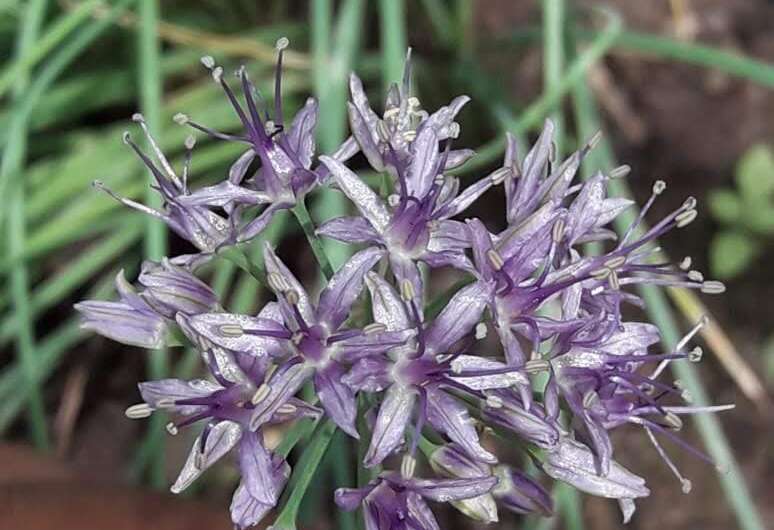
Allium Negianum
A plant discovered in Uttarakhand in 2019 has been newly confirmed as a new species of Allium.
- The plant, called Allium Negianum is a new species of onion.
- It was discovered in the Indo-Tibetan border area of Malari village, Niti valley of Chamoli district in Uttarakhand.
- It is restricted to the region of Western Himalayas in India and hasn’t yet been reported from anywhere else in the world.
- It grows at 3000 to 4800 m above sea level.
- It can be found along open grassy meadows, sandy soils along rivers, and streams forming in snow pasture lands along alpine meadows.
- The alpine meadows are locally known as “Bugyal/Bugial”, where the melting snow actually helps carry the seed to more favourable areas.
- It has long been known to local communities and the onion from Niti Valley deemed the best on the market.
Allium
- Allium is one of the largest genera in Amaryllidaceae, a family of herbaceous, mainly perennial and bulbous flowering plants.
- The genus has about 1,100 species distributed worldwide, including onion, garlic, scallion, shallot and chives.
- It naturally occurs in dry seasons in the northern hemisphere and South Africa.
- The primary center of evolution for the genus extends across the Irano-Turanian bio-geographical region.
- The Mediterranean basin and western North America are considered as the secondary centers of diversity.
- Indian Himalayan region has two distinct centers of Allium diversity
- The western Himalaya (over 85% of total diversity) and
- The eastern Himalaya (6%), covering the alpine-sub temperate region.
Earthshot Prize
The Earthshot Prize, dubbed as the “Eco Oscars” was established in 2020.
- The award was set up by Prince William and Royal Foundation, the charity founded by the Duke and Duchess of Cambridge.
- It honours individuals/organisations with one million euros for their contributions towards the following five UN Sustainable Development Goals –
- Restoration and protection of nature,
- Air cleanliness,
- Ocean revival,
- Waste-free living and
- Climate action.
- Every year, five winners will be selected from 15 finalists (3 from each category) by the Earthshot Prize Council.
- The council comprises global spokespersons who are striving to bring impactful action in various capabilities.
- The historian David Attenborough will honour five finalists between 2021 and 2030.
The Earthshot Prize’s name is a reference to the “Moonshot” ambition of then US President John F. Kennedy in 1960s who pledged to get a man on the Moon within a decade.
2021 Winners
|
Category
|
Winner
|
Contribution
|
|
Clean Our Air
|
Indian Vidyut Mohan led Takachar
|
Cheap technology innovation to convert crop residues into sellable bio-products
|
|
Protect and Restore Nature
|
Costa Rica
|
Scheme paying local citizens to restore natural ecosystems that has led to a revival of the rainforest.
|
|
Revive our oceans
|
Coral Vita Project run by two individuals
|
Growing coral in the Bahamas designed to restore the world’s dying coral reefs.
|
|
Build a waste-free world
|
The City of Milan Food Waste Hubs, Italy
|
A waste-busting initiative which dramatically cut fast while tackling hunger
|
|
Fix our Climate
|
AEM Electrolyser, Thailand/Germany/Italy
|
A renewable energy project to make hydrogen by splitting water into hydrogen and oxygen
|
Polyhouse Technology
- A polyhouse is a specially constructed structure like a building where specialised polythene sheet is used as a covering material under which crops can be grown in partially or fully controlled climatic conditions.
- It is covered with a transparent material as to permit the entry of natural light.
- Polyhouses are also helpful in reducing threats such as extreme heat and pest attacks in crops.
- Conventional polyhouses have a stationary roof which sometimes lead to excessive heat, insufficient light and prone to insufficient levels of carbon dioxide, transpiration and water stress.
- Retractable Roof Polyhouse Technology will be operated based on weather conditions and crop requirements to overcome the disadvantages in conventional polyhouses.
- Monsoon and Arabica Coffee Harvest - Coffee-growing regions in Karnataka and Kerala are receiving continuous rains which affects the harvest of ripened beans.
- It also led to the outbreak of fungal disease wherein the ripened beans rot on the branches.
- Thus, Growers are raising demands to the Government to extend the subsidy provided for setting up polyhouses to coffee growers also, who can utilise the infrastructure for drying the beans.
Source: The Indian Express, Business Line



