0.2631
7667766266
x

Newly discovered Dragonflies in Northeast India

iasparliament Logo
April 25, 2026

Prelims: Current events of national importance | Biodiversity & Conservation

Why in News?

Recently, Scientists have discovered 3 new species of dragonflies in Northeast India.

  • 3 newly identified species
    • Clouded Boghawker (Sarasaeschna nuboides)
    • Siang Boghawker (Sarasaeschna sigotaayo)
    • Long tailed Boghawker (Sarasaeschna dosdewaensis)

Common Features

  • Order – Odonata.
  • Family – Aeshnidae (boghawkers).
  • Morphology – Large multifaceted eyes, two pairs of wings, elongated body
  • Vision – Eyes with up to 30,000 facets, nearly 360° vision
  • Behaviour – Fast flyers, voracious predators of mosquitoes and flies
  • Evolutionary Note – Predate dinosaurs by over 100 million years
  • Habitat & Distribution – Found near freshwater habitats worldwide; Northeast India is recognised as an odonate biodiversity hotspot.

Distinct Features

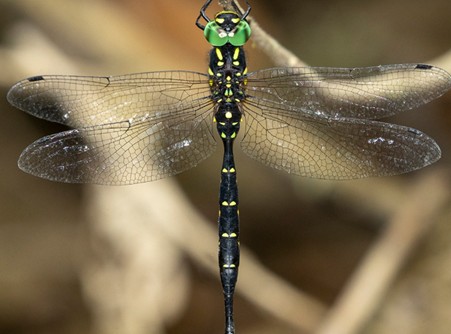
Clouded Boghawker (Sarasaeschna nuboides)

Habitat

Shallow shaded forest ponds in humid valleys

Distribution

Endemic to Siang Valley, Arunachal Pradesh

Appearance

Subtle differences in abdominal segment shape and caudal appendages

Clouded Boghawker

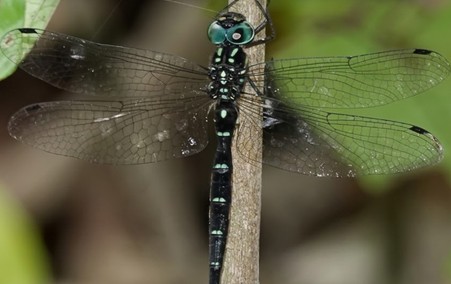
Siang Boghawker (Sarasaeschna sigotaayo)

Habitat

Same Siang Valley ponds, perching close to water.

Distribution

Endemic to Siang Valley, Arunachal Pradesh

Appearance

Differentiated by male caudal appendage structure and wing venation patterns

Siang Boghawker

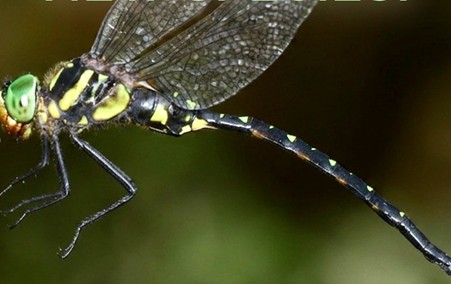
Long‑tailed Boghawker (Sarasaeschna dosdewaensis)

Habitat

Forest trail ponds and streams

Distribution

Endemic to Karimganj district, Assam

Appearance

Characterised by elongated abdominal segments (long‑tailed)

Long tailed Boghawker

  • Ecological Importance
    • Predators – Natural control of mosquito populations
    • Indicators – Reflect freshwater ecosystem health
    • Evolutionary Significance – Ancient lineage, valuable for biodiversity studies.

Quick Facts

  • Dragonflies and Damselflies – Both belong Odonata and they are found in the same freshwater habitats. But there are key differences listed below –

Dragonflies

Damselflies

  • Suborder – Anisoptera
  • Suborder – Zygoptera
  • Larger, robust
  • Smaller, delicate
  • Wings held horizontal at rest
  • Wings held vertical & together at rest
  • Strong, fast fliers
  • Slower, weaker fliers
  • Eyes are large and often touch at the top of the head.
  • Eyes are separated, not touching

Reference

Arunachal Observer | Dragonflies in Northeast India

 

Login or Register to Post Comments
There are no reviews yet. Be the first one to review.

ARCHIVES

MONTH/YEARWISE ARCHIVES

sidetext
Free UPSC Interview Guidance Programme
sidetext