0.2763
7667766266
x

Myiophanes kempi

iasparliament Logo
March 17, 2026

Prelims: Current events of national and international importance | Science and Technology

Why in News?
A rare thread-legged assassin bug described from Siju Cave in Meghalaya a century ago has been rediscovered by scientists from the Andaman Islands.
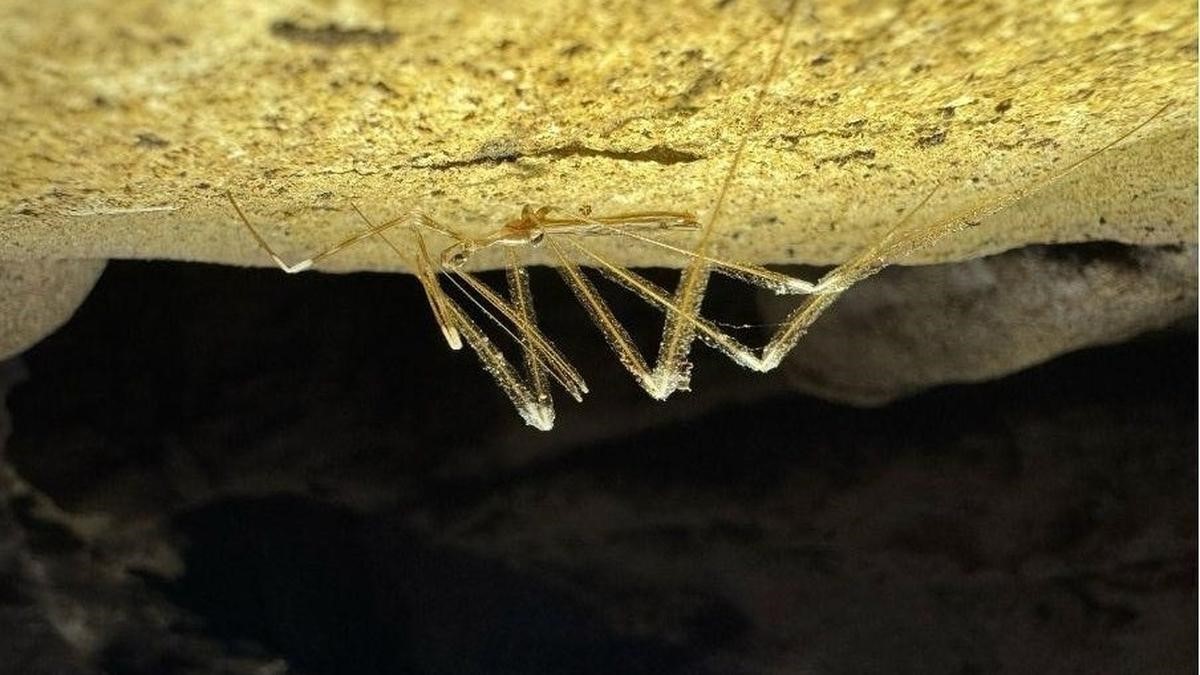
  • Recent Identification - Two thread-legged assassin bug specimens collected by a team of biologists from limestone caves in the Andaman Islands in 2019 were identified as Myiophanes kempi recently.
  • First Described in – 1924 by British entomologist Willian Edward China.
  • It had not been reported for the past 100 years after its first description.
  • Assasin bug - It is a species of assassin bug, commonly known as thread-legged bugs.
  • Genus – Myiophanes, distinguished from other Emesines by specific wing venation patterns and the structure of the prothorax.
  • Sub family - Belonging to the subfamily of Reduviidae.
  • Morphology - It has an extremely slender, delicate body with long, stilt-like legs.
  • Habitat - It is a specialised predator of the subterranean ecosystem and lives in its complete lifecycle in the darkness.
  • Distribution - This specific species is primarily associated with the Indian subcontinent, particularly reported from cave systems in regions like Meghalaya.
  • Feeding Behaviour - It uses the long raptorial forelegs for snatching prey like small arthropods of the dark cave environment (troglophiles).
  • Ecological Significance - Myiophanes kempi is a troglobitic species, meaning it is adapted to live permanently in caves.
  • It plays a role in subterranean food chains, preying on other cave-dwelling organisms.
  • Its rediscovery suggests that cave ecosystems may harbor many undiscovered or forgotten species.

Myiophanes kempi

Reference

The Hindu | Myiophanes kempi

Login or Register to Post Comments
There are no reviews yet. Be the first one to review.

ARCHIVES

MONTH/YEARWISE ARCHIVES

sidetext
Free UPSC Interview Guidance Programme
sidetext


