0.1199
7667766266
x

ICJ's Ruling on Myanmar for Genocide

iasparliament Logo
November 22, 2026

Prelims: Current events of National and International Importance| International Relations

Why in News?

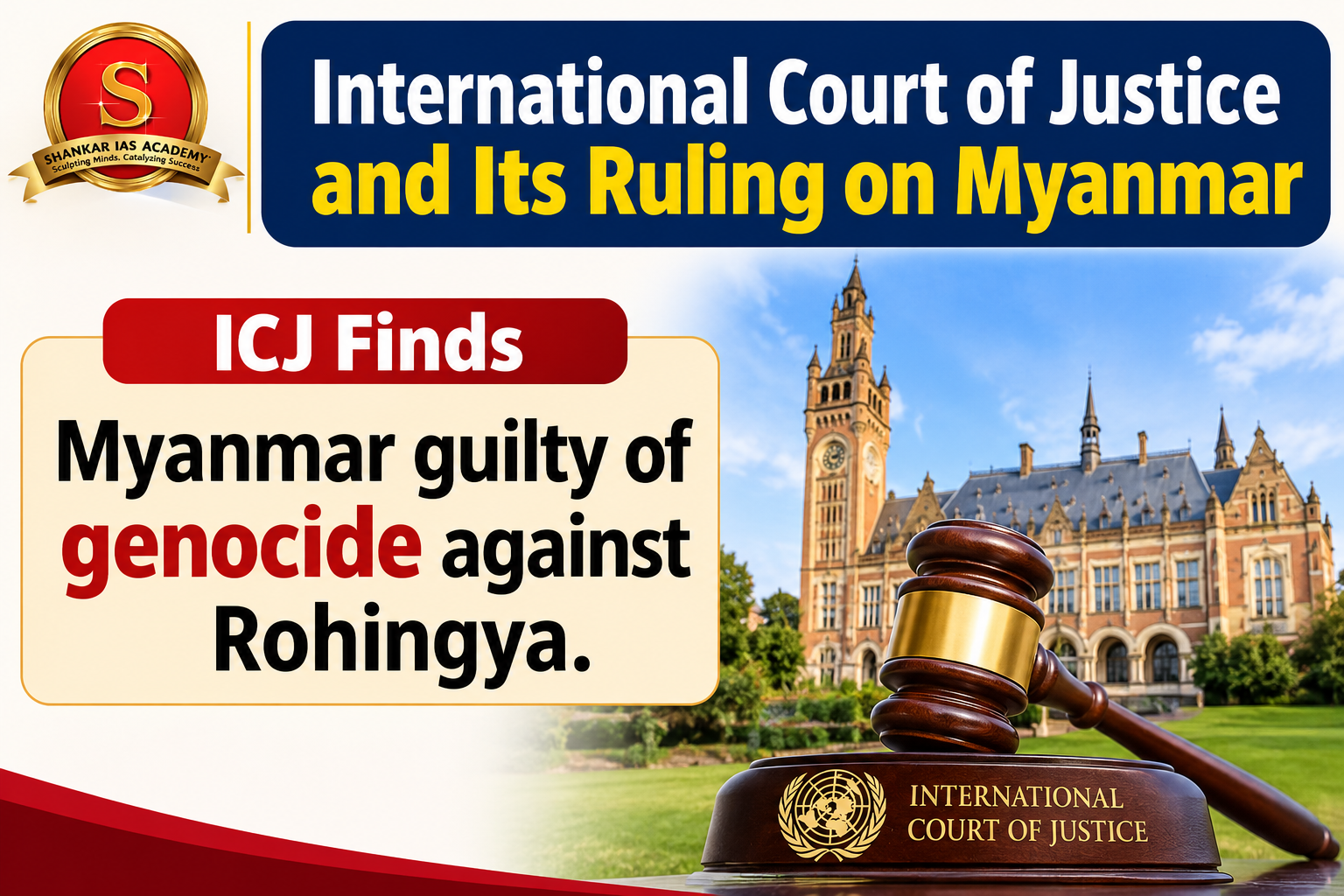
Recently, the International Court of Justice (ICJ) found that Myanmar is responsible for genocide against the Rohingya during the 2017 clearance operations in northern Rakhine State.

  • The Gambia – instituted proceedings in 2019 under the Convention on the Prevention and Punishment of the Crime of Genocide, 1948.
  • 2020 – ICJ indicated provisional measures requiring Myanmar to prevent genocidal acts against the Rohingya and preserve evidence.
  • 2022 – ICJ rejected Myanmar’s preliminary objections and confirmed its jurisdiction under Article IX of the Genocide Convention.
  • 2026 – Merits hearings were held from 12–29 January; final judgment delivered on 19 November.
  • ICJ’s ruling – The ICJ ruled 9–6 in the Gambia v. Myanmar case that Myanmar committed genocide against the Rohingya in northern Rakhine State, in violation of the Genocide Convention.
  • The ruling marks the first time in its 80-year history that ICJ judges have determined that a state committed genocide.
  • It is likely to be seen as justice for Rohingya victims of Myanmar’s brutal 2017 crackdown.
    • Binding – The judgment is final, binding on the parties and without appeal.
  • The court has no way of enforcing its verdicts, and it remains to be seen whether Myanmar’s rulers will adhere to the orders.
  • Rohingya – A minority ethnic group, largely comprising Muslims, in the predominantly Buddhist Myanmar, formerly referred to as Burma.
  • While the Rohingya people have been living in Myanmar for generations, they are not recognised by the country, rendering them effectively stateless.
  • Rohingya in India – There are around 40,000 Rohingya in India, of whom around 5,700 are in Jammu and also in Telangana, Punjab, Haryana, Uttar Pradesh, Delhi and Rajasthan.

Key Findings

  • Genocide – Myanmar committed genocide through acts including killings, serious bodily or mental harm and measures intended to prevent births, with the required intent to destroy a substantial part of the Rohingya.
  • State responsibility – The Court held Myanmar responsible for genocide and for failing to prevent and punish genocide.
  • Evidence – The Court gave considerable evidentiary weight to witness statements and analytical reports of the Independent Investigative Mechanism for Myanmar (IIMM).
  • Remedies – Myanmar must investigate and prosecute perpetrators, facilitate safe and voluntary return, restore property and provide adequate compensation.
  • Significance – First time the ICJ has found a State responsible for committing genocide.

icj-on-myanmar.png

Quick facts

International Court of Justice (ICJ)

  • Established – 1945; began functioning in 1946.
  • Headquarters – Peace Palace, The Hague, Netherlands.
  • Status – Principal judicial organ of the United Nations.
  • Composition – 15 judges, elected for 9-year terms.
  • Jurisdiction – Contentious disputes between States and advisory opinions.
  • Nature of Judgements – Final, binding on the parties and without appeal.

Reference

UN News | World’s top court finds Myanmar guilty of genocide against Rohingya

There are no reviews yet. Be the first one to review.

ARCHIVES

sidetext