Prelims: Current events of national and international importance | Polity
Why in news?
The detention of CJP leaders has brought the powers of Special Executive Magistrates (SEMs) into focus amid protests against the Special Intensive Revision (SIR) of electoral rolls.
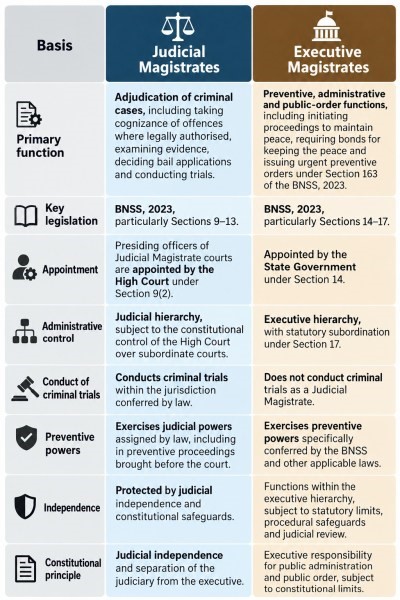
Executive Magistrate (EM)
- Appointment – EMs are appointed by the concerned State Government and do not exercise judicial powers.
- One EM may be designated as the District Magistrate (DM).
- Their promotions, increments and seniority of service depend on their superiors within the Executive.
- Hierarchy – The senior-most Executive Magistrate in a district is the District Magistrate (DM), followed by Sub-Divisional Magistrates (SDMs) in charge of sub-divisions, and Tahsildars or senior police officers appointed as Special Executive Magistrates (SEMs).
- Legal framework – Executive Magistrates are governed by Sections 14-17 of BNSS, 2023.
- Section 15 allows appointment of Special Executive Magistrates (SEMs) for specific functions and periods.
- Powers – EMs have limited powers, primarily relating to preventive measures to maintain public order and to prevent breaches of peace, but they cannot conduct trials.
- Limitations – They cannot conduct criminal trials, do not function as regular courts, and their actions are subject to judicial scrutiny.
- Special arrangement – Traditionally, EMs have been revenue or administrative officers.
- In the national capital, the Delhi Police Act empowers the central government to authorise the Police Commissioner and subordinate officers, not below the rank of ACP, to exercise powers of district and special executive magistrates.
Judicial Magistrates (JMs)
- Administration – JMs are part of the subordinate criminal judiciary, administered by the High Courts.
- Hierarchy – Includes the Chief Judicial Magistrate (CJM), Judicial Magistrates of the First Class (JMFC), and Judicial Magistrates of the Second Class (note that the separate "Metropolitan Magistrate" class was abolished under the BNSS structure).
- Legal framework – Judicial Magistrates are governed by Sections 9-13 of BNSS, 2023.
- Role – Adjudicatory and judicial; they are presided over by officers from the state judicial service appointed and trained under High Court oversight.
- Powers & Functions
- They conduct criminal trials.
- Establishment of Judicial Magistrate Courts,
- Appointment of Chief Judicial Magistrates and Special Judicial Magistrates.
- Granting regular or police/judicial remand of arrested persons and deciding bail applications.
- Law Commission’s views – The Law Commission debated whether preventive powers should remain with Executive Magistrates or be transferred to Judicial Magistrates.
- While earlier reports favoured the executive, the 41st Law Commission Report (1969) recommended vesting these powers in Judicial Magistrates, as they affect personal liberty.
Reference
Indian Express | Difference between Executive Magistrate and Judicial Magistrate



