Prelims: Current events of national and international importance | Conservation
Why in News?
A team from the Assam State Zoo and Botanical Garden has recorded the first case of albinism in the Asian water snake, in Assam.
Albinism is an extremely rare genetic trait in wild snakes, characterized by the absence of melanin pigment, resulting in pale coloration and, often, red eyes.
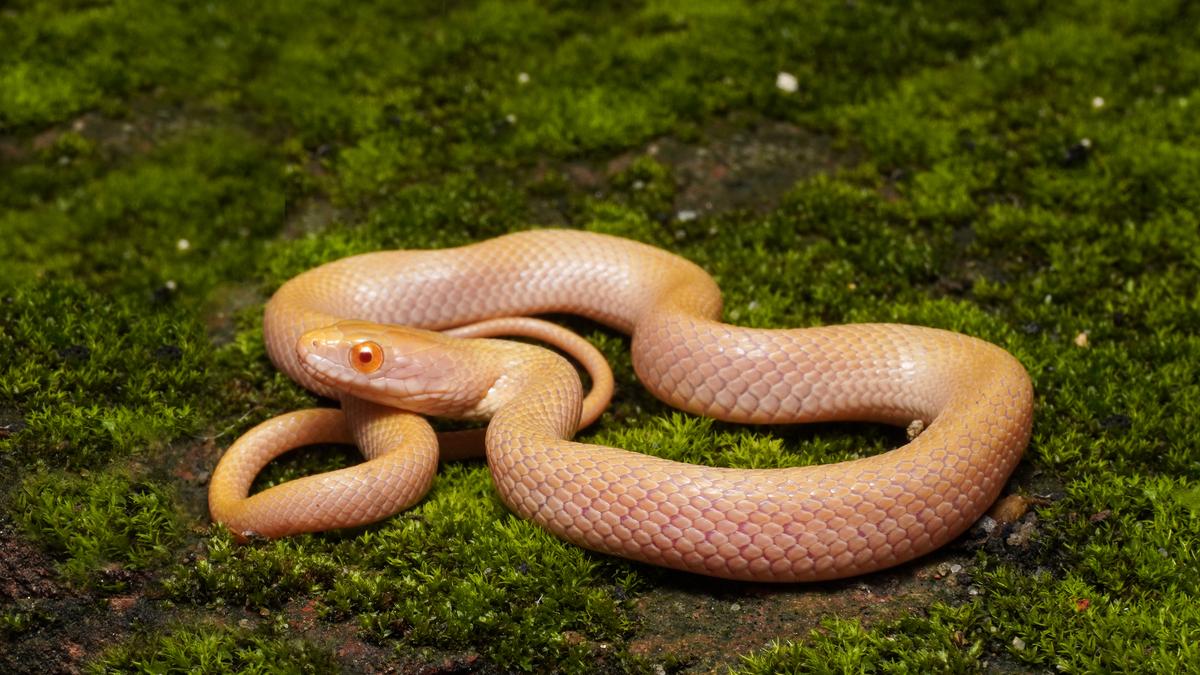
- It is also known as checkered keelback.
- Scientific Name - Fowlea piscator.
- It is a non-venomous snake in the subfamily Natricinae of the family Colubridae.
- Identification Features
- Pattern - Distinct chequered pattern on the back—alternating dark and light squares.
- Color - Usually brown, olive, or grey with blackish cross-bars.
- Belly - Yellowish or whitish underside.
- Scales - Strongly keeled scales (a raised ridge), giving the snake a rough texture.
- Size - Generally 60–90 cm, can reach up to 1.2 m.
- Habitat - Predominantly freshwater ecosystems, such as Ponds, Lakes, Rivers, Marshes, Irrigated fields, Often seen close to human settlements.
- Behavior
- Diurnal (active during the day).
- Highly aquatic, but also moves on land.
- Excellent swimmer.
- Diet - Mostly feeds on Fish (primary prey), Frogs and tadpoles, occasionally small aquatic creatures (“Piscator” literally means fish-eater.)
- Reproduction - Oviparous (egg-laying).
- Conservation Status
- IUCN - Least Concern (LC).
- Threats - Commonly found and adaptable, although habitat pollution poses risks.
- Significance – It plays an important ecological role by controlling fish and amphibian populations.
Reference
The Hindu | Albino Asian water snake



