|
Types of Puppets
|
|
String Puppets
|
- India has a rich and ancient tradition of string puppets or marionettes.
- Marionettes having jointed limbs controlled by strings allow far greater flexibility and are, therefore, the most articulate of the puppets.
|
|
Puppet Form
|
State
|
Features
|
|
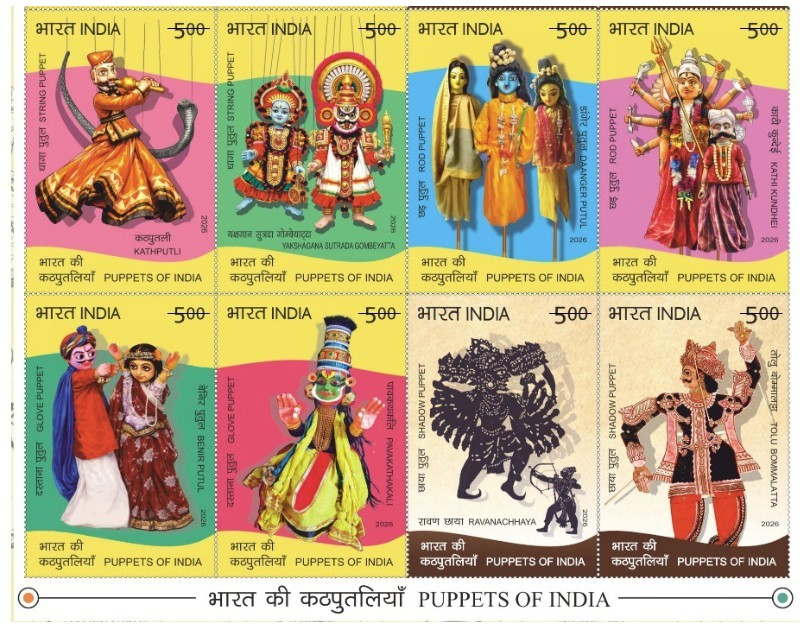
Kathputli
|
Rajasthan
|
- Carved from a single piece of wood, these puppets are like large dolls that are colorfully dressed.
- Puppeteers manipulate them with two to five strings which are normally tied to their fingers and not to a prop or a support.
|
|
Kundhei
|
Odisha
|
- Made of light wood, the Odisha puppets have no legs but wear long flowing skirts.
- The puppeteers often hold a wooden prop, triangular in shape, to which strings are attached for manipulation.
- The music is drawn from the popular tunes of the region and is sometimes influenced by the music of Odissi dance.
|
|
Gombeyatta
|
Karnataka
|
- The Gombeyatta puppet figures are highly stylized and have joints at the legs, shoulders, elbows, hips and knees.
- These puppets are manipulated by five to seven strings tied to a prop.
- Episodes enacted in Gombeyatta are usually based on Prasangas of the Yakshagana plays.
|
|
Bommalattam
|
Tamil Nadu
|
- Puppets from Tamil Nadu, known as Bommalattam combine the techniques of both rod and string puppets.
- They are made of wood and the strings for manipulation are tied to an iron ring which the puppeteer wears like a crown on his head.
- The Bommalattam puppets are the largest, heaviest and the most articulate of all traditional Indian marionettes.
|
|
Shadow Puppets
|
- They are cut out of leather, which has been treated to make it translucent.
- Shadow puppets are pressed against the screen with a strong source of light behind it.
|
|
Puppet Form
|
State
|
Features
|
|
Togalu Gombeyatta
|
Karnataka
|
- These puppets are mostly small in size.
- The puppets however differ in size according to their social status, for instance, large size for kings and religious characters and smaller size for common people or servants.
|
|
Tholu Bommalata
|
Andhra Pradesh
|
- The puppets are large in size and have jointed waist, shoulders, elbows and knees.
- They are coloured on both sides.
- Theme of the puppet plays are drawn from the Ramayana, Mahabharata and Puranas.
|
|
Ravanachhaya
|
Odisha
|
- The puppets are in one piece and have no joints.
- They are not coloured, hence throw opaque shadows on the screen.
- The puppets are made of deer skin and are conceived in bold dramatic poses.
- Apart from human and animal characters, many props such as trees, mountains, chariots, etc. are also used.
|
|
Rod Puppets
|
- Rod puppets are an extension of glove-puppets, but often much larger and supported and manipulated by rods from below.
|
|
Puppet Form
|
State
|
Features
|
|
Putul Nautch
|
West Bengal
|
- They are carved from wood and follow the various artistic styles of a particular region.
- A bamboo-made hub is tied firmly to the waist of the puppeteer on which the rod holding the puppet is placed.
|
|
Orissa
|
- The Orissa Rod puppets are much smaller in size.
- The Orissa rod-puppeteers squat on the ground behind a screen and manipulate.
|
|
Yampuri
|
Bihar
|
- Unlike the traditional Rod puppets of West Bengal and Orissa, these puppets are in one piece and have no joints.
- As these puppets have no joints, the manipulation is different from other Rod puppets.
|
|
Glove Puppets
|
- Glove puppets, are also known as sleeve, hand or palm puppets.
- The head is made of either papier mache, cloth or wood, with two hands emerging from just below the neck.
- The rest of the figure consists of a long flowing skirt.
|
|
Puppet Form
|
State
|
Features
|
|
Pavakoothu
|
Kerala
|
- It came into existence during the 18th century due to the influence of Kathakali, the famous classical dance-drama of Kerala, on puppet performances.
- The manipulator puts his hand into the bag and moves the hands and head of the puppet.
- The musical instruments used during the performance are Chenda, Chengiloa, Ilathalam and Shankhathe conch.
- The theme for Glove puppet plays in Kerala is based on the episodes from either the Ramayana or the Mahabharata.
|