Prelims: Current events of national and international importance
Why in News?
A recent study published in that beavers can transform riverbeds into powerful carbon sinks, offering significant potential for climate mitigation in Europe.
These are semi-aquatic rodents known for their role as "nature's engineers."
Genus – Castor.
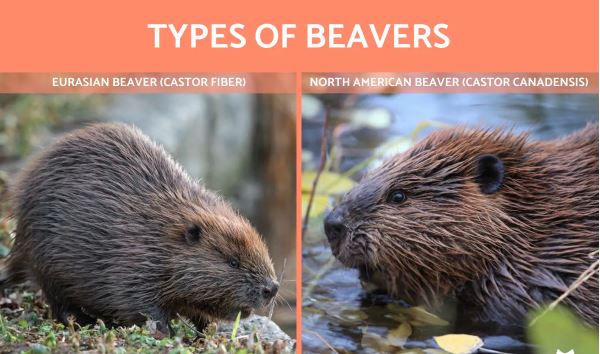
Scientific Name - Castor canadensis (North American) and Castor fiber (Eurasian).
They are the second-largest living rodents in the world, surpassed only by the Capybara.
Habitat – Found in temperate and boreal regions of Europe, North America, and parts of Asia.
Prefer river corridors, wetlands, and riparian forests.
Build dams and lodges in streams and rivers, altering hydrology and sedimentation.
Global Distribution –Europe - Increasingly recolonising rivers after conservation efforts.
North America - Widespread across Canada and USA.
Asia - Small populations in Mongolia, China, and Russia.
India Context - While not currently native, historical records indicate that the Manipur beaver (Trogontherium cuvieri) existed in India until approximately 1905.
Ecological Importance -Beavers are classified as a Keystone Species because their impact on the environment is disproportionately large compared to their population size.
Dam Building - By constructing dams with mud, stones, and wood, they slow down stream flow and create wetlands.
Nature’s Kidneys- These dams act as natural filtration systems, trapping sediment and filtering out pollutants like nitrates and phosphates, which significantly improves water quality downstream.
Carbon Sequestration - Recent studies (2025-26) highlight that beaver-created wetlands are excellent at trapping organic matter and storing carbon, helping mitigate climate change.
Disaster Mitigation- * Floods: Dams act as "speed bumps" that reduce the peak of floodwaters.
Droughts - Ponds store water that recharges groundwater and keeps streams flowing during dry spells.
Wildfires - Areas with beaver activity often act as natural firebreaks, remaining lush and green while surrounding areas burn.
Threats – Dependence on intact dams for long‑term carbon storage.
Seasonal CO₂ emissions when water levels recede.
Human–wildlife conflict - flooding of agricultural lands and infrastructure.
Conservation Status -IUCN Red List- Both species are currently listed as Least Concern.