0.2943
7667766266
x

Northern pintails

iasparliament Logo
January 05, 2026

Prelims: Current events of national and international importance | Species

Why in News?

Northern pintails have arrived at the Pobitora Wildlife Sanctuary, which is a popular winter destination for migratory birds from Siberia, Central Asia, and the Himalayas.
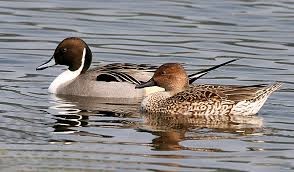
  • The Northern Pintail is probably one of the most numerous duck species in the world.
  • Scientific Name – Anas acuta.
  • Habitat – Freshwater wetlands, lakes, ponds, rivers, saltwater bays, tundra, prairies, flooded fields.
  • Distribution – It is found across North America, Europe, and Asia, with many Siberian breeders crossing the Bering Strait to winter in North America.
  • Size
    • Male - 64-74 cm.
    • Female - 21-23 (53-58 cm).
  • Appearance – Elegant, slender duck with long neck and tail, slim and long-necked.
    • Males have a chocolate brown head with a white slash coming up the neck, a white breast, and a mostly grey body and long pointed tail.
    • Females are patterned in light brown, known by a pointed tail, a long neck, a grey bill, and more subdued colouration compared to males.

Northern Pintail

  • Forages in wetlands and in fields on agricultural waste grains.
  • Diet – Mostly eat seeds, insects, grains, molluscs, plant material, etc.
  • Behaviour – They dabble in wetlands and fields, often mixing with other duck species in the nonbreeding season.
  • Conservation Status
    • IUCN – Least Concern.
    • Wild Life (Protection) Act, 1972 – Schedule II.
  • Threats – Habitat loss, climate change, vulnerable to wetland degradation, and also sensitive to lead poisoning and avian botulism.

References

  1. The Hindu | A winter getaway in Assam’s wetlands
  2. All about Birds | Northern Pintail
  3. Audubon Society | Northern Pintail


Login or Register to Post Comments
There are no reviews yet. Be the first one to review.

ARCHIVES

MONTH/YEARWISE ARCHIVES

sidetext
Free UPSC Interview Guidance Programme
sidetext