Mains : GS Paper II | Heath
Why in News?
Recent epidemiological data reveals a sharp, unprecedented rise in pediatric Crohn’s disease and Ulcerative Colitis across India.
What is Bowel Disease?
- Bowel disease most commonly refers to Inflammatory Bowel Disease (IBD), a chronic group of autoimmune-related conditions characterized by persistent inflammation of the digestive tract.
The digestive tract is the long, hollow tube from the mouth to the anus, comprising the esophagus, stomach, small intestine and large intestine.
- Nomenclature - It is named after Burrill B. Crohn, an American gastroenterologist who first described the condition in 1932, along with his colleagues, Leon Ginzburg and Gordon D. Oppenheimer.
IBD is not the same as Irritable Bowel Syndrome (IBS), which is a functional disorder of the gut.
- Main Types of IBD
- Crohn's Disease - Can affect any part of the gastrointestinal tract (from the mouth to the anus) and often involves patchy inflammation that goes deep into the layers of the bowel tissue.
- Ulcerative Colitis - Causes long-lasting inflammation and sores (ulcers) limited specifically to the lining of the large intestine (colon) and rectum.
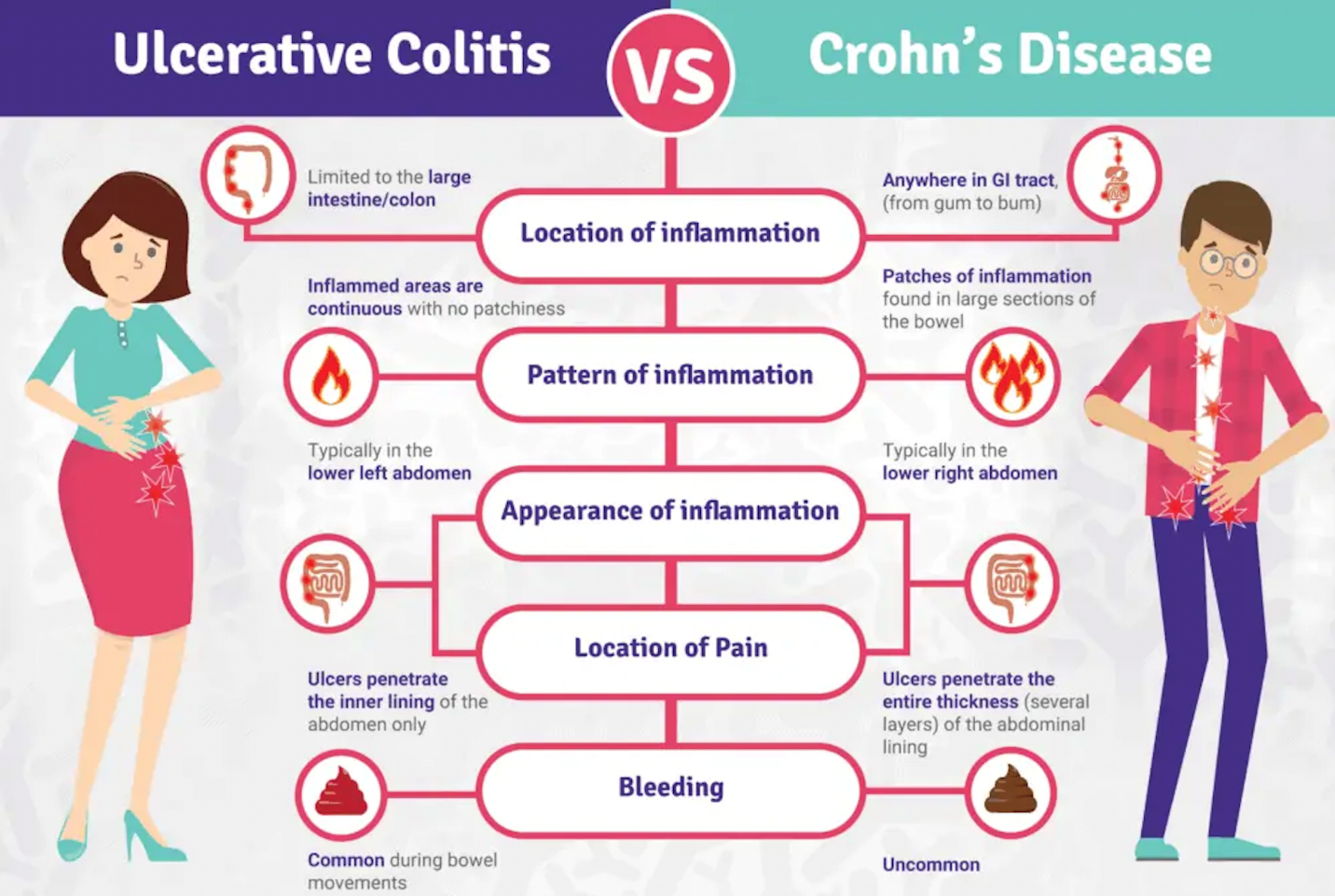
- Common Symptoms - Symptoms often fluctuate between periods of active illness (flares) and remission:
- Persistent diarrhea (sometimes lasting more than a few weeks)
- Abdominal pain and cramping
- Blood or mucus in the stool
- Unexplained weight loss and fatigue
- Cause - The exact cause is unknown. It is linked to an atypical immune response where the body attacks healthy gut bacteria, causing chronic, unresolving inflammation.
- Age of Onset - Can occur at any age, but is most commonly diagnosed between the late teens and early thirties.
- Genetic Predisposition - Strongly runs in families. Carrying specific genes increases susceptibility if a close relative has inflammatory bowel disease (IBD).
- Environmental Triggers - Smoking is a major modifiable risk factor that increases the likelihood of developing the disease.
How does it Impacts growth on Children?
- Systemic Consequences - IBD severely disrupts physical growth, nutrient absorption, pubertal onset, and emotional well-being.
- Notably, impaired growth and delayed puberty can manifest before gastrointestinal symptoms appear.
- Mechanisms of Malnutrition - Children face severe undernutrition due to a combination of:
- Malabsorption & Loss - Chronic gut inflammation blocks the absorption of essential proteins, vitamins, and minerals (critical for bone and muscle), compounded by diarrheal nutrient loss.
- Reduced Intake - Loss of appetite and a fear of triggering symptoms lead to self-imposed food avoidance.
- Energy Diversion - The body diverts scarce calories away from growth to combat systemic inflammation.
- Hormonal Suppression - The disease produces inflammatory molecules that actively suppress growth and sex hormones, directly stalling physical development and puberty.
What is the Holistic Management & Treatment needed for Pediatric IBD?
- Multidisciplinary Care Model - Management requires a holistic team led by a pediatric gastroenterologist, alongside dieticians and allied specialists to address both gut and systemic (extra-gastrointestinal) symptoms.
- Clinical Treatment Goals - The primary objective is suppressing inflammation to achieve sustained, deep remission using long-term biological therapies, immunosuppressants, and anti-inflammatory medications.
- Targeted Nutritional Therapies -
- Exclusive Enteral Nutrition (EEN) - Highly effective for Crohn’s disease to control flare-ups and improve nutritional intake simultaneously.
- Deficiency Correction - Mandatory supplementation of macro- and micronutrients (specifically iron, calcium, and Vitamin D) to preserve bone density and muscle mass.
- Psychosocial Support - Chronic illness induces stress, anxiety, and social withdrawal.
- Continuous emotional counseling and psychological impact assessments are as critical as clinical prescriptions.
- Risks of Delayed Diagnosis - Subtle signs like unexplained growth failure must trigger early screening.
- Delayed detection leads to severe, hard-to-treat structural complications such as fistulae, strictures, and bowel perforation.
References
- The Hindu | Inflammatory bowel diseases
- The Hindu | Crohn’s disease



