|
Status of NO2 in Air pollution
|
- Higher exposure to NO2 shows the growing risk from traffic exhaust in densely populated urban areas.
- Seven of the 10 countries with the highest NO2 exposures are in the high income countries in West Asia.
- The highest exposures to NO2 have been noted in countries with high socio-development index, including Singapore, Japan and Canada.
- Impact on children – NO2 is a leading risk factor for the development of childhood asthma.
- About 55% of 194 countries studied do not yet meet the annual WHO Air Quality Guidelines of 10 µg/m3, resulting in 42% of the world’s population being exposed to unacceptable levels.
- Impact of climate – It is a catalyst for formation of ozone, yet another very harmful gas.
- NO2 reacts with other chemicals in the atmosphere to produce both particulate matter and ozone.
|
|
Status of Ozone in Air pollution
|
- Ozone levels have also increased in South Asia.
- Impact of Climate change – The chemical reactions that form ozone increase when the air is warmer, especially during heatwaves.
- Evidence shows that ozone spikes during heatwaves in China and Europe.
- Exposure – The proportion of population experiencing high ozone exposures is also increasing in India, Nigeria, Pakistan, and Brazil.
- Impact on vegetation – It can reduce crop yields, damage biodiversity, and undermine food security and nutrition.
- Impact on humans – In 2021, ozone was responsible for 56% of all global ozone deaths reported in South Asia.
- Exposure to ozone is associated with an increased risk of both acute and chronic respiratory illnesses.
- India – It has recorded about 237,000 ozone related deaths.
- In 2021, nearly 50% of all ozone-related COPD deaths were in India, followed by China and Bangladesh.
|
|
Status of PM 2.5 in Air pollution
|
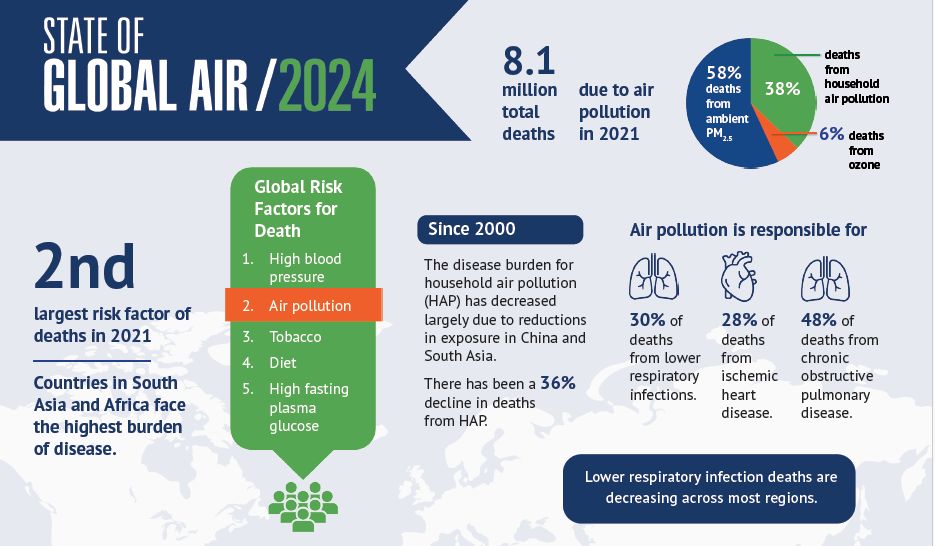
- Evidently, nearly 20% of the global ambient PM2.5 is attributed to household air pollution.
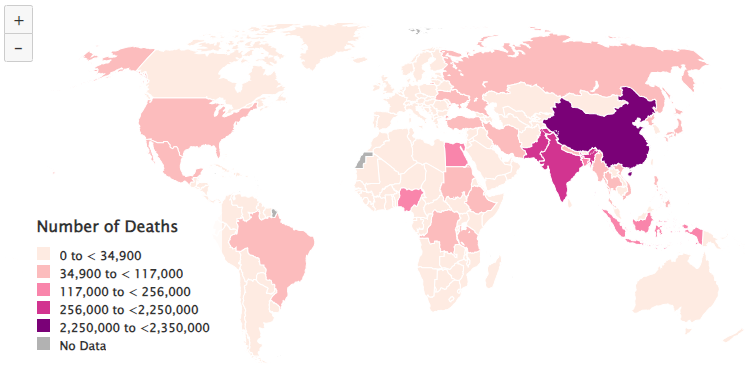
- Impact on humans – India and China have recorded 2.1 million and 2.3 million deaths respectively and together account for nearly 55% the total global disease burden from particulate matter.
|