What is the issue?
- Chennai is reeling under its worst water crisis in decades.
- The crisis calls not for reactive measures but much more systematized solutions to address the water problem in the long run.
What is Chennai’s current water scenario?
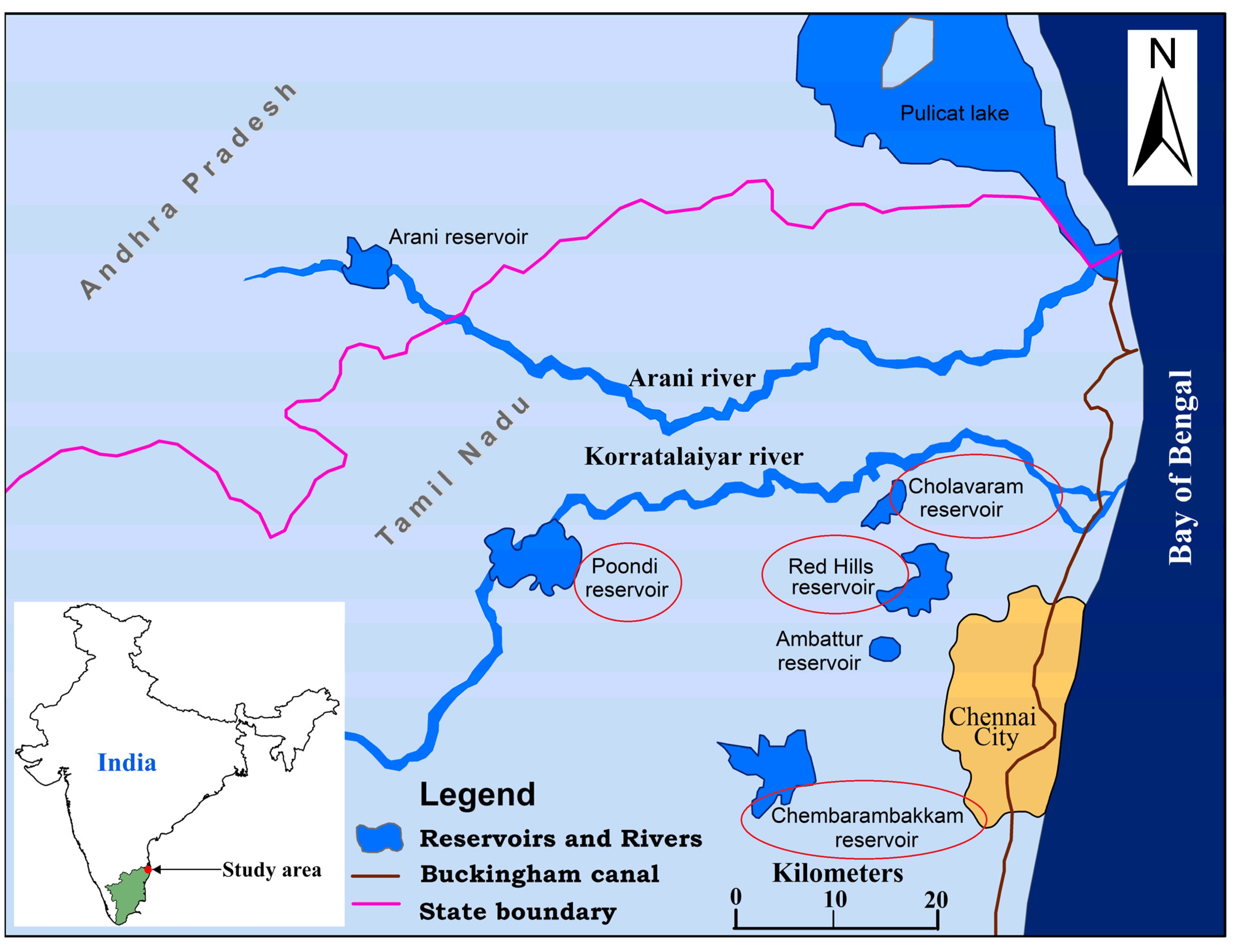
- Chennai’s four main reservoirs (Cholavaram, Chembarambakkam, Poondi and Red Hills) are nearly empty.
- The city has not had rain in nearly 200 days; only over the past few days there has been light rainfall.
- Groundwater too has been over extracted.
- This year, a tanker (private) of approximately 12,000 litres of water cost Rs. 6,000 in several places (last year, it was Rs. 2,000).
- This is almost 7 times the cost of water supplied by Chennai Metro Water.
- The Tamil Nadu Chief Minister has announced that 10 MLD (million litres a day) of water will be transported to the city for the next 6 months from Jolarpettai, Vellore district.
- The Tamil Nadu government has also accepted Kerala’s offer to provide water.
How effective had rainwater harvesting been?
- At the political level, rainwater harvesting (RWH) was initiated in 2000. From 2003 onwards, the government mandated RWH.
- This meant that the building plan for new apartments and dwellings included a RWH component, to get Chennai City Corporation’s approval.
- The order also mandated that all existing buildings in Tamil Nadu install RWH structures.
- 16 years from then, it is now found that even most of the government buildings in Chennai do not have a functioning RWH structure.
- The Greater Corporation of Chennai has now ordered the inspection of RWH structures, much after the crisis.
What are the shortfalls in the approach?
- The scarcity of essential resources such as water not only leads to economic losses but also social unrest.
- But the issue with any crisis in India is the fire-fighting strategy that is adopted in response, as opposed to systematized solutions.
- These timely arrangements are soon forgotten when things temporarily go back to normal.
- In effect, efforts are not taken to deeply ingrain such practices in the system to have a sustainable remedy.
- This level of action, especially during the floods, is usually undertaken at the level of the National Disaster Management Authority and the National Disaster Response Force.
- Local follow-up measures that are necessary to sustain the results are largely ignored.
- E.g. during the floods in Chennai in December 2015, the encroachment of wetlands was the key issue, as the catchment areas got vanished
- But even now, three-and-a-half years later, no formal mechanism has been put in place to check whether wetlands are being desilted.
- According to a recent NITI Aayog report, 21 Indian cities will run out of groundwater by 2020 if usage continues at the current rate.
- But water governance in cities across India has only been ad hoc.
How can water governance be made better?
- The Chennai water crisis brings to the fore the need for urban water planning and management boards in metropolitan cities.
- This should work as a permanent body similar to urban development authorities.
- The objective should be to regulate the supply, demand and maintenance of water services and structures.
- This authority should monitor and regulate groundwater in the city.
- With exorbitant levels of pricing for water supply by private tankers, this must be regulated too.
- The urban water management board should also oversee the desilting of lakes in the city on a regular basis.
- The management of lakes comes under the Public Works Department, which works in isolation from Chennai Metro Water.
- There has to be proper coordination among these institutional mechanisms for a better integrated water policy.
- Deepening of beds of existing lakes is essential for greater water storage and better water percolation.
- Additional desalination plants should also be commissioned; this water might help bring down water prices to below 6 paise a litre.
- Metro Water and groundwater use should be measured and priced progressively.
- Similar to the electricity tariff, the quantity of use should determine the price.
- The board can practise differential pricing and cross-subsidise those households with a lower per capita income use of water.
- Water meters are a must for this to be implemented effectively.
- In existing RWH structures, pipes are either broken or clogged, filtration equipment is not cleaned, bore pits have too much silt, and drains are poorly maintained.
- The board must also have regulatory powers to monitor the maintenance of RWH structures at homes and in offices.
- Water scarcity has resulted in the IT corridor in Chennai suffering, with most companies even asking employees to work from home.
- In contrast, the large manufacturing units around the Sriperumbudur-Oragadam belt have been able to maintain production due to efficient water management practices.
- The water boards thus need to work in coordination with governments on granting approvals to new mass working spaces.
- IT corridors should be regulated for their water-use necessities.
- Besides these, Chennai must also learn from the experiences of other cities across the world such as Cape Town, South Africa.
- Here, water saving is being driven through the concepts such as Day Zero, prompting better and more efficient use of water.
- [Day zero is when active water rationing will happen; most of the city’s taps will be closed, with strict regulations for use.]
- In all, a sustainable governance solution to water crisis along with public participation is the need of the hour.
Source: The Hindu


