Why in news?
The US Supreme Court recently ruled in favour of a group of fishermen and a Gujarat village panchayat in a suit against the International Finance Corporation (IFC).
What is the power project in dispute?
- The case relates to alleged pollution caused by a Gujarat-based power plant partly funded by the IFC.
- It is a coal-fired power plant near Mundra port in Gujarat’s Kutch district, with a capacity of 4,150 MW.
- It is the country’s first to deploy energy-efficient supercritical technology.
- It results in 40.5% higher energy efficiency compared to other coal-based power technologies.
- It was initially conceived by Power Finance Corporation Limited and awarded in 2007 to Coastal Gujarat Power Limited, a subsidiary of Tata Power.
- It reached full generation capacity in March 2013 and since then, is selling power to utilities in Gujarat, Maharashtra, Haryana, Punjab and Rajasthan.
- Funding - Of the estimated project cost of $4.14 billion, $450 million was funded in 2008 by IFC.
- Other contributions include -
- Asian Development Bank - $450 million as loan
- Export Credit Agency of Korea - $800 million as loan
- CGPL - raised around Rs 1.5 billion from Indian banks through debt
What are the fishermen's concerns?
- The company had first got clearance for a closed-cycle cooling system in the Mundra plant.
- But it got government clearances modified and installed boilers with an open cooling system.
- The plant thus operates a cooling technology that requires three times more water than the system it got clearance for.
- Reportedly, the outfall canal of the plant discharges hot and saline water at a rate of 600 million litres/hr into the sea.
- The complainants have alleged that it has affected marine life as well as groundwater sources.
- With marine life near the coast affected, fishermen are forced to sail farther in search of fish.
- The company also dredged the coast and seafloor for their outfall channel.
- It has also deposited sand near a well, a source of drinking water, and the water in the well has turned saline since.
- Complainants add that coal dust and fly-ash from the plant are damaging date palms and chikoo trees.
Who filed the complaint?
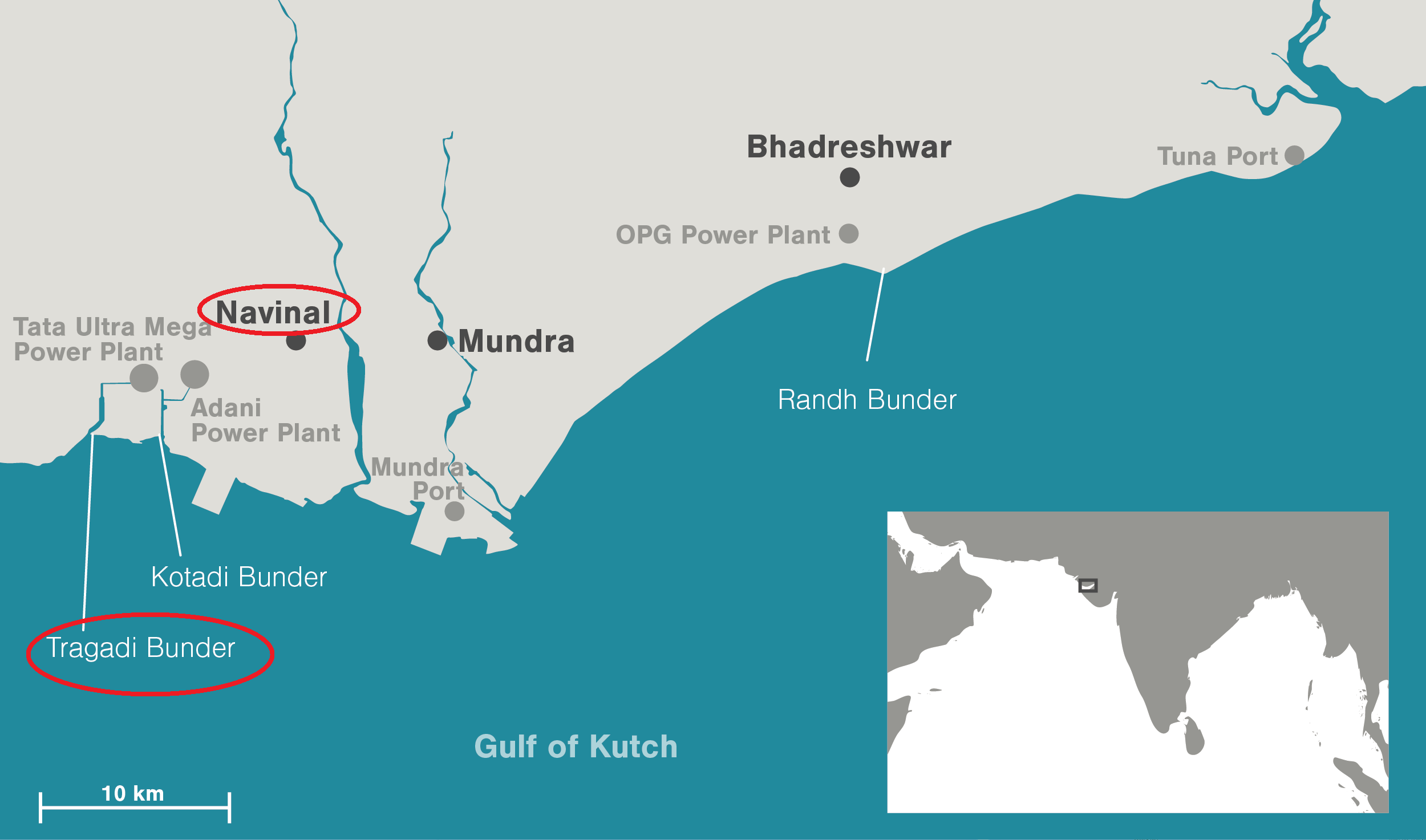
- The plant is located near Tragadi village in Mandvi taluka, and Navinal village in neighbouring Mundra taluka in Gujarat.
- Tragadi has a colony of fishermen in an area known as Tragadi-Nal while Navinal is rich in agriculture and horticulture.
- In 2010, Tragadi fishermen and Navinal residents came together under the aegis of fishermen’s organisation Machimar Adhikhar Sangharsh Sanghathan (MASS).
- They complained to the company about the damage caused to the environment.
- The fishermen demanded that the plant switch to the closed-cycle cooling system, but the company refused.
What happened then?
- In 2015, a suit was filed through EarthRights International against IFC in the Federal District Court for the District of Columbia.
- They contended that the funding agency should be held responsible for air, land and water pollution caused by the plant.
- Arguing that the IFC internal audit had found environmental violations, they sought damages and injunctive relief.
- But IFC claimed absolute immunity from such litigation under the US International Organisation Immunities Act (IOIA), 1945.
- [IOIA grants international organisations such as the World Bank and the WHO the same immunity from suit as foreign governments enjoy.]
- The district court ruled in IFC’s favour, and on challenge, the Court of Appeals for the district also upheld it.
What is the current verdict?
- Later, on challenge, the US Supreme Court reversed the Appeals Court judgment.
- The court held that IFC's claim for absolute immunity from the suit filed is not valid.
- It ruled that IFC enjoyed only “restrictive immunity” in activities abroad.
- It also remanded the matter back to the lower court for adjudication on damages. The case has now gone back to the US district court.
Source: The Indian Express
Quick Fact
International Finance Corporation
- IFC is a sister organization of the World Bank and member of the World Bank Group.
- It is the largest global development institution focused exclusively on financing private-sector development projects in poor and developing countries.
- It offers financial resources, technical expertise, global experience, and innovative thinking to help its clients overcome financial, operational, and other challenges.


