Why in news?
The United States has made an offer of financial aid to Greenland, which has angered Denmark.
What is the U.S.'s proposed rationale?
- The U.S. iterates that the decision was to aid “sustainable growth” in the autonomous island.
- The other reasons for the US government’s decision include -
- Russia’s "aggressive behaviour and increased militarisation in the Arctic"
- China’s “predatory economic interests”
Why is Denmark concerned?
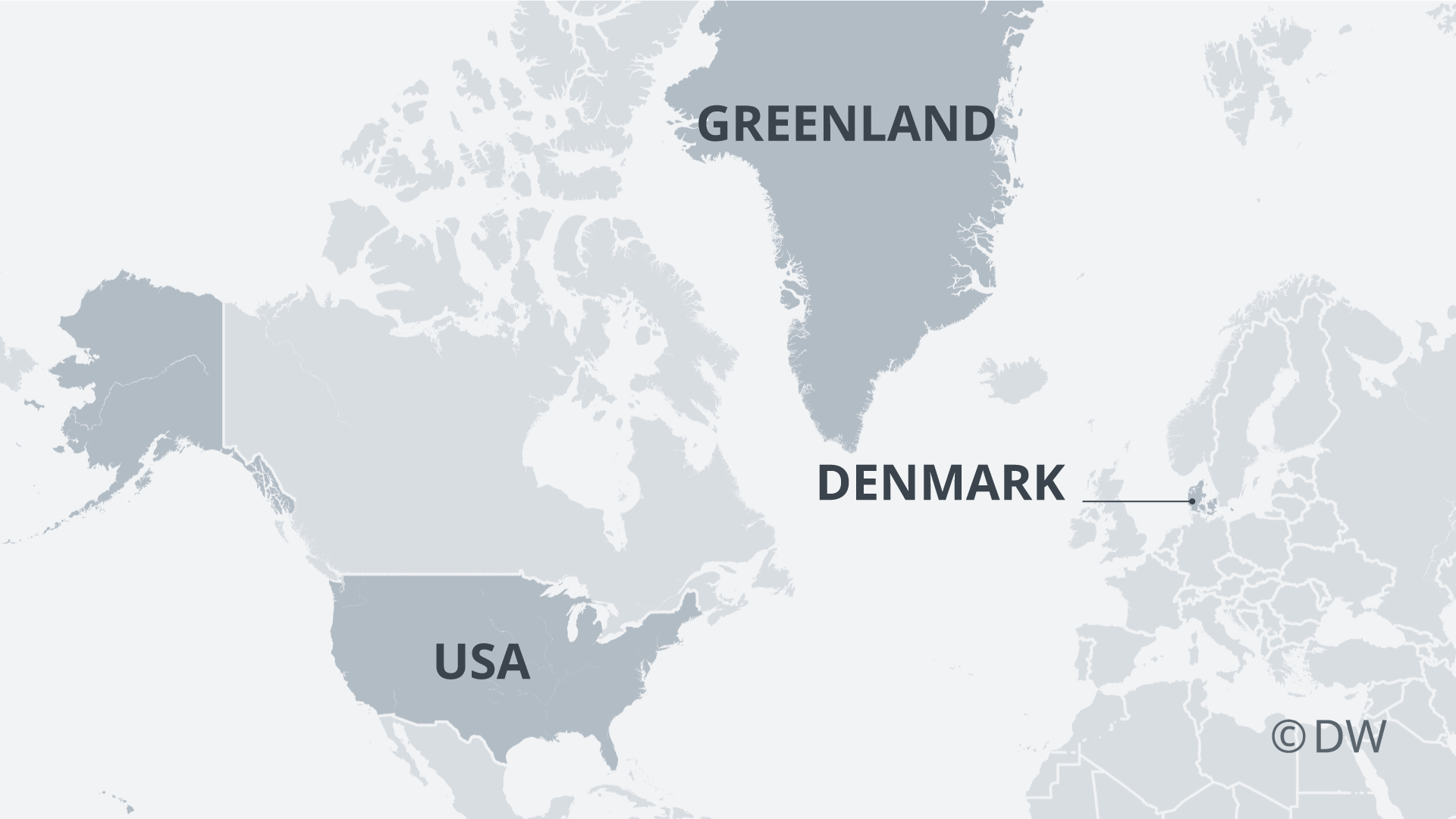
- Greenland is an autonomous island that falls within the territory of the Kingdom of Denmark.
- Earlier U.S. had a row with Denmark over a proposal to “purchase” Greenland from the Denmark.
- The Danish Prime Minister Mette Frederiksen had earlier dismissed the possibility of the US acquiring Greenland.
- Denmark maintained that Greenland was not for sale, was not Danish too but belonged to Greenland itself.
- The financial aid proposal follows plans by the US government to open a consulate in Suuk, Greenland’s capital.
- Members of Denmark’s parliament expressed outrage at this attempt of the US government.
- Some politicians considered the steps to be “extremely provocative” interference by the US.
- Both Greenland and Denmark are well-aware of the shifting geo-politics in the region.
- But the decisions are seen as an extension of the Trump administration’s colonial policies towards the island.
Why is Trump so interested in Greenland?
- Trump’s interest in Greenland is almost an extension of his worldview and US foreign policy in his administration.
- Purchasing another country or territory is unusual, but the US government has done this twice before -
- when President Thomas Jefferson acquired Louisiana from the French in 1803
- when President Andrew Johnson purchased Alaska from Russia in 1867
- If the plan ever materialises, Trump would secure a place in US history of being the third president to add land to the country’s territory.
- For many among Trump’s voter base in the US, acquiring new territory would appeal to their nationalistic and imperialistic views.
- Greenland - Interestingly, Greenland, though the world’s largest island, is geographically a part of the North American continent.
- However, it has always been culturally aligned with Europe.
- Greenland is also a resource rich land mass, strategically located between the Arctic Sea and the Atlantic Ocean.
- It has some of the largest deposits of rare-earth metals, including iron-ore, uranium, byproducts of zinc, neodymium, praseodymium, dysprosium and terbium.
- These rare-earth metals are used in the production of electric cars, mobile phones and computers.
- Geopolitical - For the longest time, China has been the world’s largest supplier of the above rare-earth metals.
- An acquisition of Greenland would make the US less reliant on China for these rare-earth metals.
- Greenland, as a part of the Arctic region, also has large deposits of undiscovered oil and gas.
- The US is opening a consulate in Greenland after nearly seven decades of closing its first consulate after the Second World War.
- The move is largely to counteract Russia and China’s aggressive foreign policy moves to gain more influence in the region.
- Russia has been steadily expanding its military presence in the Arctic.
- China has done its bit on the economic front.
- Due to climate change, the Arctic ice is melting at an accelerated rate, opening up water routes for military and maritime trade.
- This is in addition to global superpowers and regional players vying for control over Greenland’s vast untapped natural resources.
Source: The Indian Express
Quick Fact
Greenland
- Denmark established trading colonies in Greenland, and between late 1700s and mid-1900s, the Danish government assumed full control over Greenland.
- During World War II, Denmark came under the occupation of Germany.
- Also, Greenland’s protection became the responsibility of the United States.
- However, Greenland was returned to Denmark in 1945.
- Following this, numerous social and economic reforms were undertaken by the Danish government.
- Greenland was granted autonomy on May 1st, 1979.
- In 1973, Greenland had joined the European Union as part of Denmark but left in 1985.
- The foreign affairs and defense of Greenland is managed by Denmark.
- Denmark also contributes to about two-thirds of Greenland’s budget.


