Bon Bibi
- Bon Bibi is a deity of the Sunder ban forest, west Bengal.
- The followers of Bon Bibi are fishermen, crab-collectors and honey-gatherers who live in the mangroves with wild animals such as tigers and crocodiles to earn a livelihood.
- They believe that only Bon Bibi protects them when they enter the forest and survive in tiger dominated areas.
- People express their belief in Bon Bibi through Bon Bibir Palagaan, it is a centuries-old folk theatre and dramatic storytelling form that is enacted throughout the island.
- Traditionally, the performances are held near Bon Bibi temples or villages bordering the forests.
All India Tiger Estimation
- All India Tiger Estimation 2018 has entered the Guinness World Record for being the world’s largest camera trap wildlife survey.
- The fourth iteration of the survey, conducted in 2018-19 was the most comprehensive to date, in terms of both resource and data amassed.
- According to the report of 2018, India now has an estimated 2967 tigers out of which 2461 individual tigers have been photo captured, about 83 % of the tiger population.
- With this number, India is home to nearly 75% of the global tiger population.
- India has already fulfilled its resolve of doubling tiger numbers, made at St. Petersburg in 2010, much before the target year of 2022.
- The All India Tiger Estimation done every four year once, It is
- Steered by the National Tiger Conservation Authority
- Technically supported by Wildlife Institute of India
- Implemented by State Forest Departments and partners.
Snakebite Mortality in India
- Centre for Global Health Research (CGHR), Canada has recently released a study titled ‘Snakebite Mortality in India: A Nationally Representative Mortality Survey’.
- The study found that India has recorded 1.2 million snakebite deaths in the 20-year period from 2000 to 2019 with an average of 58,000 deaths caused by snakebite annually.
- Around 70% of these deaths occurred in low altitude, rural areas of eight States namely Uttar Pradesh, Andhra Pradesh, Bihar, Jharkhand, Madhya Pradesh, Odisha, Telangana, Rajasthan and Gujarat.
- Half of all the snakebite deaths occurred during the monsoon period from June to September.
- The World Health Organization (WHO) recognizes snakebite as a top-priority neglected tropical disease.
- Indian anti-venoms neutralize venom from only the following snakes such as
- Spectacled Cobra (there are three other Indian cobra species),
- Common Krait (there are seven other krait species),
- Russell’s Viper,
- Saw-scaled viper,
- Whereas there are 12 other snake species causing fatal bites in the country.
Ypthima watsoni
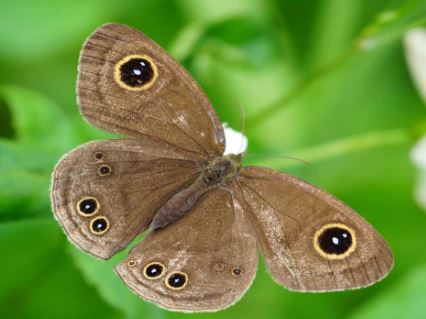
- Recently, a team of wildlife researchers has rediscovered ‘Ypthima watsoni’ butterfly.
- The species was last seen in the year 1958 in Manipur.
- The rediscovery was after 61 years near a village called Phuldungsei in Jampui Hills under the North Tripura district.
- It is a species of Satyrinae butterfly and commonly known as ‘Looped three-ring’.
- It was distributed in Assam, Myanmar and Thailand.
Tetrastemma Freyae
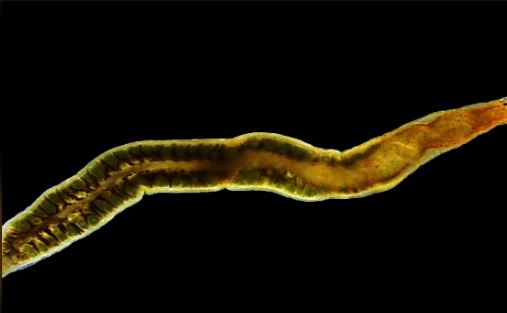
- Recently, researchers have identified a new species of marine invertebrate i.e. 'Tetrastemma Freyae', found along the coast of Tamil Nadu.
- It feeds on dead and decaying material and helps to recycle nutrients in coastal and deep water sediments.
- It is associated with sediments and is predatory as it has a role in maintaining the food chain.
- It uses its proboscis, similar to a butterfly which does to collect nectar.
- It has neurotoxins in its proboscis which could lead to developing drugs.
Ophiocordyceps Nutans
- Recently, researchers have found Ophiocordyceps nutans (fungi) for the first time in central India, at the Kanger Valley National Park in Bastar, Chhattisgarh.
- Earlier, these have been reported in India only from the Western Ghats.
- Ophiocordyceps nutans host on a specific insect, Halyomorpha halys.
- Halyomorpha halys is commonly known as the stink bug and is a pest to forest trees and agricultural crops.
- The stink bug is known to damage the flower and fruits of soybean, green beans, apple, pear, etc.
- Studies have shown that these fungi can be used as a biological pest control agent against the stink bugs.
- Exploring these fungi as a pesticide will help reduce the harmful effect of chemicals in fields.
- In the Western Ghats, the local people use these fungi as an immune stimulator.
- Scientists claim that it contains a component called ‘cordycepin’ which has anti-cancer properties.
Kanger Valley National Park
- Kanger Valley got the status of a national park in 1982.
- It derives its name from the Kanger River, one of the very few perennial rivers of Bastar.
- The park is a typical mixed humid deciduous type of forest, in which the Sal, Saugaun, teak and bamboo trees are available in abundance.
- The most popular species in this area is the state bird of Chattisgarh, Bastar Hill Myna which is capable of emulating the human voices.
- The park is known for the presence of underground limestone caves.
Source: AIR, the Hindu


