Why in news?
This year (2020) marks the 105th Anniversary of the Armenian Genocide.
What is the Armenian Genocide?
- The Armenian Genocide is called the first genocide of the 20th century.
- It refers to the systematic annihilation of Armenians in the Ottoman Empire from 1915 to 1917.
- Approximately 1.5 million Armenians died during the genocide, something Turkey has consistently denied.
- The Armenian diaspora marks April 24 as Armenian Genocide Remembrance Day.
Why did the Armenian Genocide occur?
- The Armenian Genocide is a direct result of the developments during the First World War.
- Although Armenians had always faced discrimination, harassment and persecution in Asia Minor, this heightened around 1908.
- The Armenians were an educated and wealthy community, characteristics that drew resentment from others.
- The Armenians in the Ottoman empire were Christians by faith.
- The Ottoman Caliphate feared that they would bear allegiance to Russia with similar religious affiliations than the Ottoman Empire.
- Hamidian Massacres (1894–1896) - It is the first state-sanctioned pogrom which is a result of the continued hostility towards Armenians.
- [Pogrom - An organized massacre of a particular ethnic group]
- The Hamidian Massacres were a prelude to the Armenian Genocide.
- But, the reigning monarch, Abdul Hamid II was never held accountable for the massacres.
Who were the Young Turks?
- In 1908, a political reform movement that called itself the Young Turks formed of intellectuals and revolutionaries.
- It led a rebellion against Abdul Hamid II in an attempt to overthrow the monarchy in favour of a constitutional government.
- When the monarchy was overthrown, Armenians believed they may finally get a chance at equality in the state.
- However, as the political ideology of the Young Turks changed, they became less tolerant of Armenians.
- The Russo-Turkish wars and the conflict in the Balkans and Russia further increased hostilities against the Armenians.
What happened during World War I?
- After the World War I broke out in November 1914, the Ottoman Turks participated in the war, siding with Germany.
- The Armenians began organising volunteer battalions to fight for Russia against the Ottoman Turks.
- This resulted in the Ottoman Turks engaging in a mass-removal campaign of Armenians from the border areas along the Eastern Front.
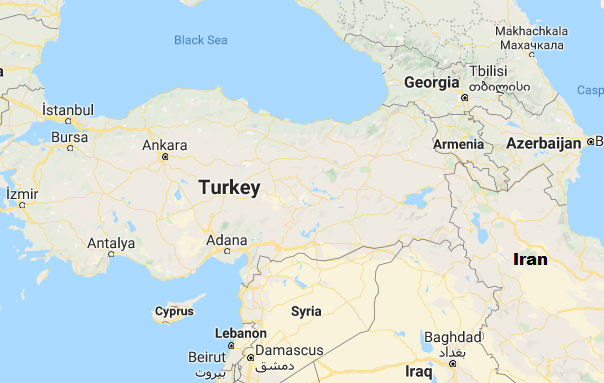
- On April 24, 1915, Ottoman Turkish government officials executed many Armenian intellectuals.
- It was the start of the Armenian Genocide.
- As the Armenian were forced to walk for days in the deserts of Syria and Arabia, many died in the journey.
- They faced brutality in concentration camps across Syria and Iraq.
- Armenians in villages were burned in large groups and were intentionally drowned in the Black Sea.
What happened in the aftermath?
- Many documents and evidence pertaining to the Armenian Genocide were destroyed a few years before and after the end of the war.
- Many Armenians were displaced.
- They fled to countries around the world seeking refuge.
- Diplomats posted in the region during the Armenian Genocide had documented the occurrences in personal diaries and official records.
- Displaced Armenians were not permitted to reacquire the property that they were forced to leave behind during the genocide.
Does Turkey recognise the Armenian Genocide?
- Turkey has dismissed the use of the term “Armenian genocide”.
- In 2007, then Turkish Prime Minister, called for an alternative term to be used for the ‘Genocide’ - 1915 Olayları, the ‘Events of 1915’.
- In Turkey, intellectuals who have openly written about the Armenian Genocide have faced violence, arrest and have even been killed.
- As of 2020, 32 countries and Parliaments have formally recognised the Armenian Genocide.
- Only Turkey and Azerbaijan openly deny its occurrence.
- Remaining countries, including India, have not officially recognised the Armenian genocide.
Source: The Indian Express


