|
Key principles of the Safe System approach
|
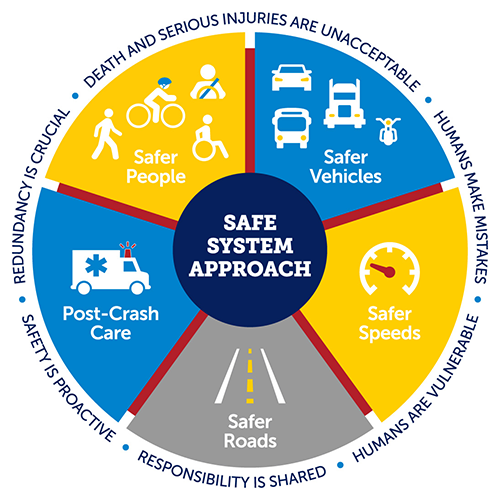
- Human Fallibility - It acknowledges that people will make mistakes, and the system should be designed to accommodate these mistakes.
- Human Vulnerability - It recognizes that humans are fragile and cannot withstand impacts above a certain speed (typically 30 km/h).
- Systemic Approach - It considers the interaction between road infrastructure, vehicles, road users, and speeds to create a holistic and integrated safety system.
- Focus on Prevention and Mitigation - It aims to prevent crashes in the first place and, if they do occur, to reduce the severity of injuries.
- Prioritizing Safety - It makes safety the primary consideration when designing and managing roads.
|
|
Four Key Elements of a Safe System
- Safe Roads and Roadside - Designing roads that are predictable, forgiving of errors, and encourage safe speeds.
- Safe Speeds - Setting appropriate speed limits and ensuring compliance to avoid excessive speeds.
- Safe Vehicles - Building vehicles that prevent crashes and protect occupants, pedestrians, and cyclists in the event of a crash.
- Safe Road Users - Encouraging road users to be alert, compliant with rules, and to take responsibility for their own safety.
|