Hurricanes Classification
- Hurricane ‘Dorian’ is on track to make landfall in Florida as extremely dangerous ‘Category 4’ storm.
- Meteorologists use the ‘Saffir-Simpson Hurricane Wind Scale’ to measure a hurricane's strength.
- It is a 1 to 5 rating scale based on a hurricane's sustained wind speed.
- This scale estimates potential property damage.
- Category 3 and higher are considered as major hurricanes because of their potential for significant loss of life and damage.
- Category 1 and 2 storms are still dangerous, require preventative measures.
- In the western North Pacific, the term "Super typhoon" is used for tropical cyclones with sustained winds exceeding 150 mph.
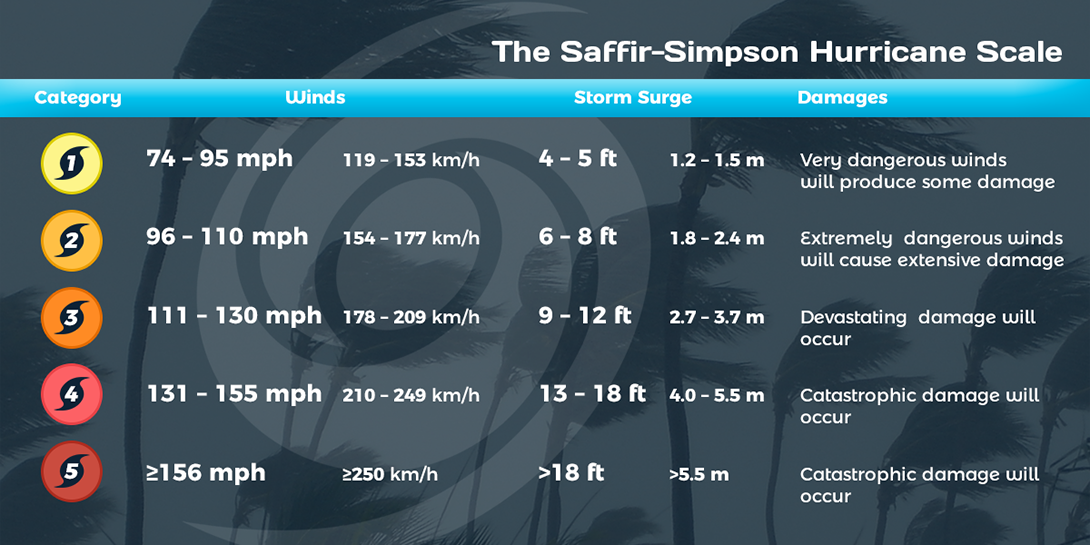
- However this scale only takes into account a storm’s maximum windspeed and disregard other threats like expected rainfall or storm surge.
- An alternative to the Saffir-Simpson Scale is AccuWeather’s “Real Impact Scale”.
- This takes other metrics besides wind speed into account.
Evolution of Jupiter
- ‘Juno’, the NASA probe orbiting Jupiter, has been sending information that gives scientists new insights into the evolution and structure of the planet.
- A new study suggests that 4.5 billion years ago, Jupiter received a massive whack from a planet still being formed and swallowed it.
- Another study looks at the reasons why the “stripes” on Jupiter do not run deep into its surface.
- Information sent by Juno shows that Jupiter’s core is not mainly ice and rock as previously thought.
- It is a “fuzzy core” that includes lighter elements like helium and hydrogen.
- Scientists suggest that it could be explained by a head-on collision with a still-forming planet about 10 times the size of Earth.
- Magnetic fields can make fluids that conduct electricity (like Jupiter’s atmosphere) behave more like honey than water.
- Deeper into the planet, where the pressure is higher, the atmosphere becomes more conducting.
- It is more strongly influenced by the planetary magnetic field.
GI Tag
- Tamil Nadu’s ‘Dindigul lock’ and ‘Kandangi saree’ gets GI tag.
- The Dindigul Lock, Hardware and Steel Furniture Workers Industrial Co-operative Society and Amrar Rajiv Gandhi Handloom Weavers Cooperative Production and Sales Society now have the exclusive rights over these products.
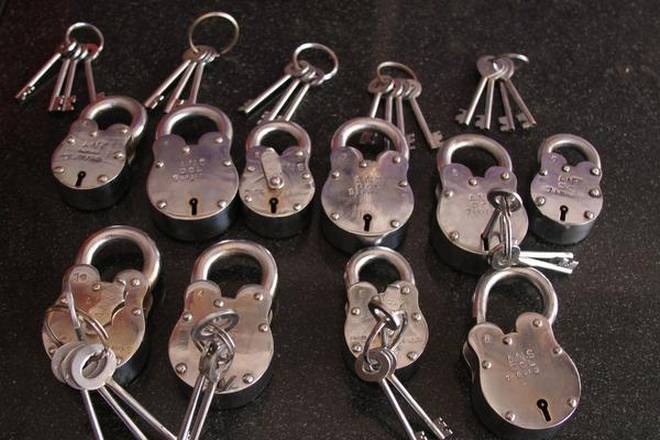
- The ‘handmade’ Dindigul locks were famous for their traditional design, safety and quality raw materials.
- Government institutions such as prisons, hospitals and even temples use these locks instead of other machine-made ones.
- Every lock is designed and possesses a unique style and it has its own special name.
- Some varieties of the locks made in Dindigul are Mango lock, Door lock, Almirah lock, Export lock, Excise lock.
- There are various categories of locks including brass, steel, mild steel painted chromium plated and galvanized lock.
- There is also complete manual assembling with each lock having its own unique key code.
- Kandangi Sarees, are manufactured in the Karaikudi taluk in Sivaganga district.
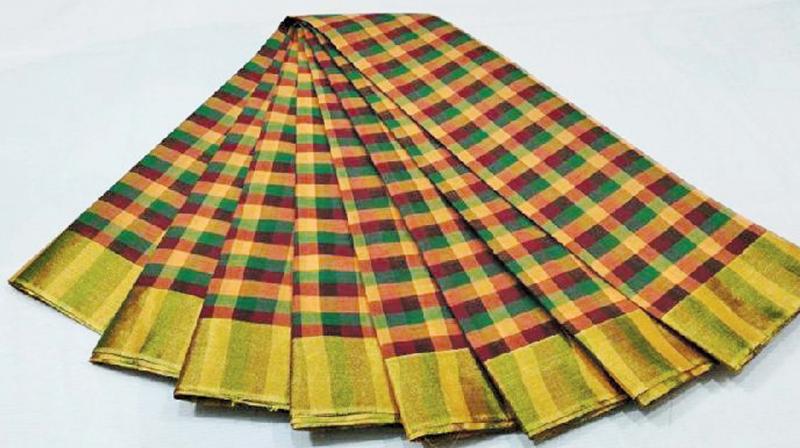
- They are characterised by large contrast borders and some are known to have borders covering as far as two-thirds of the saree.
- Amrar Rajiv Gandhi Handloom Weavers Cooperative Production and Sales Society Ltd. filed the application for GI tag.
- The sarees are being made in the town for more than 150-years.
- Traditionally, Kandangi sarees were all brick-red, black and mustard, a combination that flatters any type of complexion.
- The traditional Kandangi cotton saree is known to be distinctly characterised in the border by the design of temple checks.
- The sarees exude brilliant colours like bright yellows, oranges, red and a minimal black in the traditional pattern of stripes.
- They are made out of natural dyes and is known to be distinctly characterised in the border by the design of temple checks.
Area and Production of various Horticulture Crops
- Department of Agriculture, Cooperation and Farmers Welfare has released the 3rd Advanced Estimate of Area and Production of various Horticulture Crops.
- This is based on the information received from different State/UTs and other source agencies.
- Total Horticulture Production of the country is estimated to be 313.85 Million Tonnes which is 0.69% higher than in 2017-18.
- Overall increase is observed in production of Fruits, Vegetables, Spices, Flowers and Honey.
- Overall decrease is observed in production of Plantation and Aromatics & Medicinal crops as compared to last year.
- Fruits Production
- Estimated to be around 98.57 Million Tonnes this year,
- Compared to 97.36 Million Tonnes last year.
- Estimated to be around 185.88 Million Tonnes,
- It is 0.81% higher than the production last year.
- Onion Production estimated to be 23.48 Million Tonnes,
- Potato Production is estimated to be 53.03 Million Tonnes,
- Tomato Production is estimated to be 19.39 Million Tonnes,
- Spices Production is estimated to be around 9.22 Million Tonnes, which is higher than the production last year.
Source: PIB, The Indian Express


