Emigration Bill 2019
- The draft Emigration Bill 2019 is released by the ministry of external affairs (MEA), and currently pending parliamentary approval.
- It proposes a new legislative framework for matters related to emigration of Indian nationals.
- It is set to replace the extant one under the Emigration Act of 1983.
- The objective of the new legislation is to draw up appropriate regulations that would conform the contemporary global agenda on emigrant matters.
- The 1983 Act, enacted in the specific context of large-scale emigration to the Gulf, falls short in addressing the wide geo-economic, geo-political and geo-strategic impact that emigration has today.
- The draft bill proposes a three-tier institutional framework, with the MEA as the nodal ministry.
- At the top, a central Emigration Management Authority (EMA) has been proposed for policy guidance and supervision.
- In the middle, a Bureau of Emigration Policy and Planning, and a Bureau of Emigration Administration shall handle day-to-day operational matters and oversee the welfare of emigrants.
- At the bottom, nodal authorities in states and union territories shall coordinate aspects of management related to both emigrants and returnees.
- This could allow vertical policy coherence on emigration matters—particularly in promoting and managing safe, orderly and regular emigration.
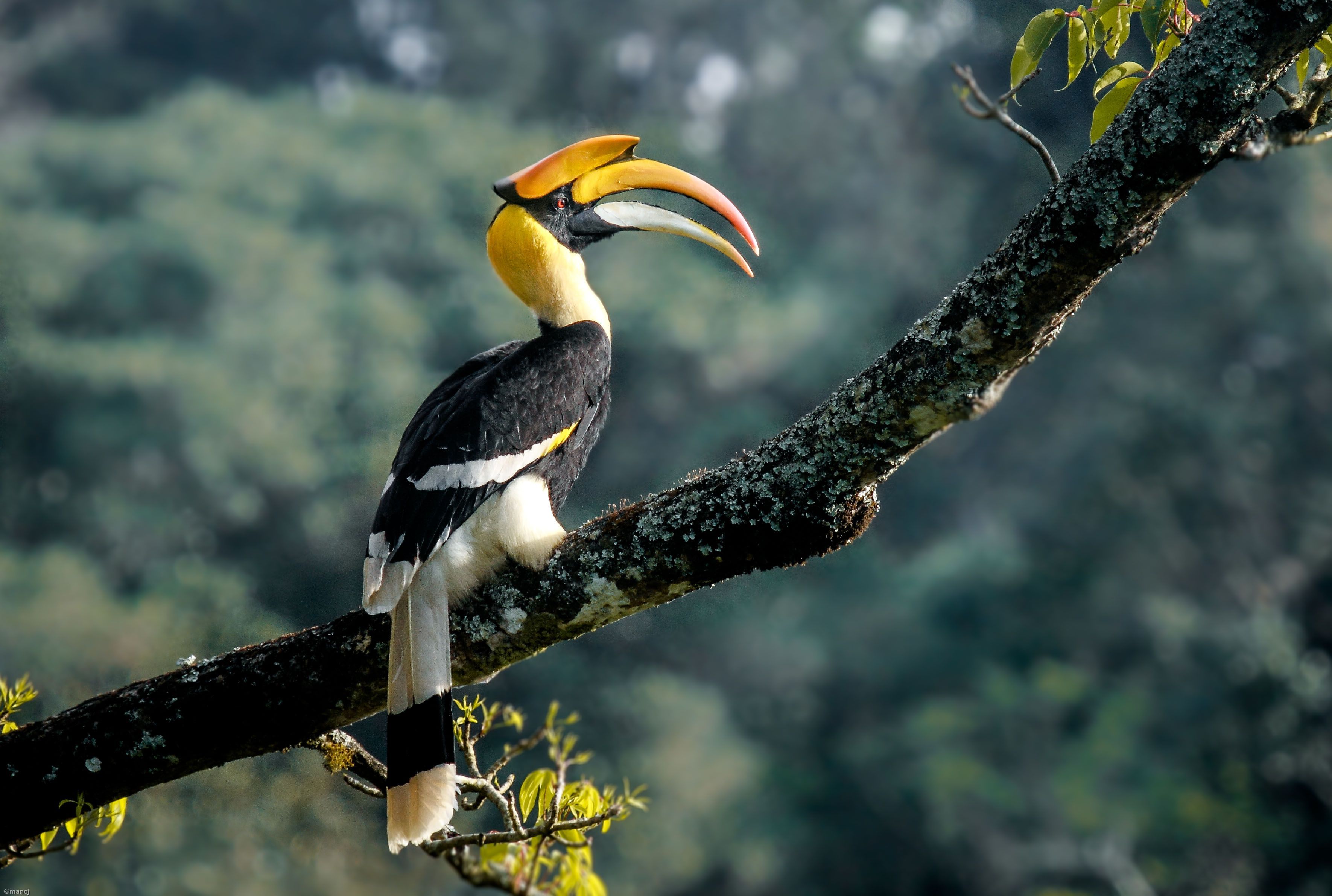
Great Indian Hornbill
- The great hornbill is one of the larger members of the hornbill family, In India the bird is found in Western Ghats and in North-east India.
- The bird is state bird of Kerala and Arunachal Pradesh.
- Recently the bird was documented probably for the first time within Coonoor town in the Nilgiris.
- The bird is known to populate the lower slopes of the Nilgiris up to an elevation of around 1,200 meters above mean sea level.
- It is an elusive species which tends to steer clear of major towns and human habitations.
- According to IUCN the Great Indian Horn bill is consider to be Vulnerable.
- Every year in the month of December great Indian hornbill festival is celebrated in Nagaland.
International Finance Corporation (IFC)
- The International Finance Corporation (IFC) is an international financial institution that offers investment, advisory, and asset management services to encourage private sector development in developing countries.
- It is a member of the World Bank Group and is headquartered in Washington, D.C., United States.
- It offers an array of debt and equity financing services and helps companies face their risk exposures, while refraining from participating in a management capacity.
- It advises governments on building infrastructure and partnerships to further support private sector development.
- Awareness in the fields of IT, Space, Computers, robotics, nano-technology, bio-technology and issues relating to intellectual property rights.
Candida Auris Fungus
- Candida auris is a multiple drug resistance fungus that presents a serious global health threat to humans.
- C. auris spread in hospitals, targeting people with weakened immune systems. and it is difficult to identify with standard lab methods.
- Symptoms may not be noticeable, because patients infected with C. auris are often patients in the hospital with another serious illness or condition.
- It can spread from one patient to another in healthcare settings through contact with contaminated environmental surfaces or equipment.
Source: PRS, The Hindu