IMD Colour-Codes
- The ‘India Meteorological Department’ (IMD) issued a ‘Red’ alert for Mumbai due to continuous downpour across the city.
- IMD uses 4 colour codes to indicate various categories of alerts, from Green to Red.
- Green (All is well)
- No action needs to be taken by the authorities.
- The forecast is of light to moderate rain.
- Authorities are advised to “Be updated” on the situation.
- It also suggests that the weather could change for the worse.
- Orange/Amber (Be prepared)
- Authorities are expected to “Be prepared”.
- The forecast is of heavy to very heavy rainfall.
- It is also a sign for people to prepare for evacuation.
- Authorities to “Take action”.
- The forecast is for extremely heavy rainfall.
- Extremely bad weather conditions, certainly going to disrupt travel and power and has significant risk to life.
- These alerts are universal in nature and are also issued during floods.
- Rainfall levels (according to IMD),
- Moderate - 15.6 mm to 64.4 mm rain in 24 hours
- Heavy - 64.5 mm to 115.5 mm in 24 hours
- Very heavy - 115.6 mm to 204.4 mm in 24 hours
- Extremely heavy - more than 204.5 mm in 24 hours.
Dadabhai Naoroji birth anniversary
- September 4, 2019 was the 194th birth anniversary of ‘Dadabhai Naoroji’.
- “Grand Old Man of India”, was among the first leaders who stirred national consciousness in the country.
- He was closely involved with the Indian National Congress in its early phase.
- His first agitation, in 1859, concerned recruitment to the ‘Indian Civil Service’ (today’s IAS).
- In 1865 and 1866, Naoroji helped in founding the ‘London Indian Society’ and the ‘East India Association’ respectively.
- The two organisations sought to bring nationalist Indians and sympathetic Britons on one platform.
- In 1885, Naoroji became a vice-president of the Bombay Presidency Association.
- He was nominated to the Bombay legislative council and helped form the Indian National Congress (INC).
- He was Congress president thrice, in 1886, 1893, and 1906.
- He was the first Asian to become a ‘British MP’ when he was elected to the House of Commons in 1892.
- In the British Parliament, Naoroji worked to bring Indian issues to the fore.
- A moderate himself, Naoroji acted as a liaison between nationalist Indians and British parliamentarians.
- In 1893, he helped form an Indian parliamentary committee to attend to Indian interests.
- Naoroji was a vocal critic of the colonial economic policy in India.
- He was the key proponents of “Drain Theory”, disseminating it in his book “Poverty and Un-British Rule in India”.
- He argued that imperial Britain was draining away India’s wealth to itself through exploitative economic policies.
- He set up the ‘Gyan Prasarak Mandali’ (Society for Promotion of Knowledge) for the education of Indians.
- He acted as a mentor to Mahatma Gandhi, Bal Gangadhar Tilak and Gopal Krishna Gokhale.
Climate change and Bananas
- A new study has found that climate change has benefited Bananas over the last several decades.
- It also predicted that the trend will reserve, with climate change eventually causing a negative impact.
- Bananas are recognised as the most important crop, providing food, nutrition and income for millions across the globe.
- It thrive in warmer climates and India is the world’s largest producer and consumer of the fruit crop.
- The study found that 27 countries, accounting for 86% of the world’s dessert banana production.
- These countries have, on an average seen increased crop yield since 1961 by 1.37 tonnes/hectare every year.
- It was due to the changing climate resulting in more favourable growing conditions.
- In India, data from the National Horticulture Board show broadly consistent yields in 6 years.
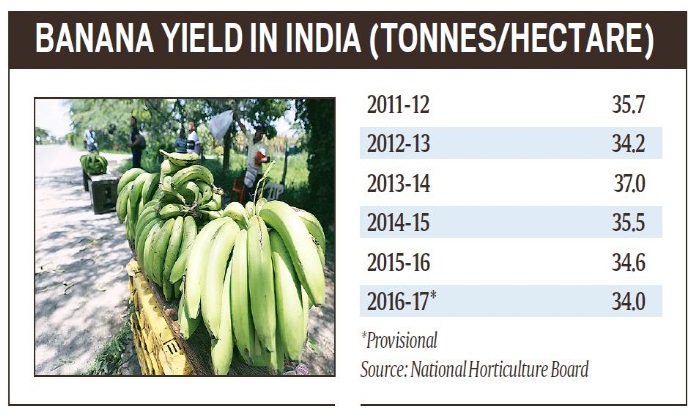
- The study says the gains in these 27 countries could be significantly reduced by 2050 to 1.19-0.59 tonnes/hectare.
- The study predicts that 10 countries, including India could see a significant decline in crop yields.
- On the other hand, that some countries including Ecuador (the largest exporter), Honduras and a number of African countries may see an overall benefit in crop yields.
James Webb Space Telescope (JWST)
- NASA's James Webb Space Telescope has been fully assembled.
- It is the successor to the ‘Hubble observatory’ and is scheduled to launch into space in March 2021.
- The JWST won’t just replace Hubble, it will massively expand our ability to observe distant objects.
- Once put in space, the telescope will explore the cosmos, planets and moons within our solar system.
- It will also explore the most ancient and distant galaxies using infrared light.
- It is funded by NASA in conjunction with the European Space Agency (ESA) and the Canadian Space Agency (CSA).
- It will also have the power to analyse the atmospheres of many the new planets, for the potential for life.
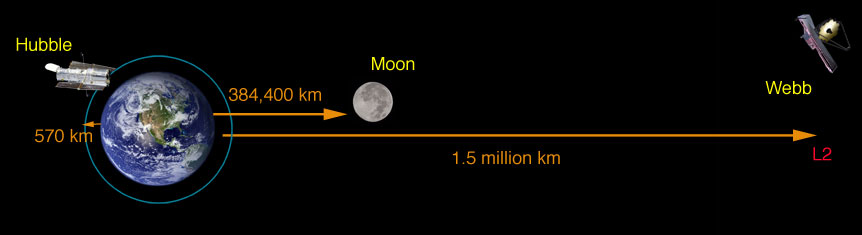
- After launch, it will head near the Earth-Sun ‘L2’ Lagrange point almost a million miles away (1.5 million kilometers).
Source: PIB, The Indian Express


