Prelims – Current events of National Importance | History of India.
Mains (GS I) – Indian Heritage and Culture.
Why in News?
The Archaeological Survey of India (ASI) has announced the discovery of 4 centuries-old rock art sites in Mizoram, estimated to date between the 16th and 19th centuries.
- Survey conducted areas - Champhai, Khawzawl, Saitual, and Serchhip districts.
- Findings - In Maite village, a rock cliff features a prominent human figure surrounded by smaller human figures, animals, gongs, a row of mithun heads, and some unidentified symbols.
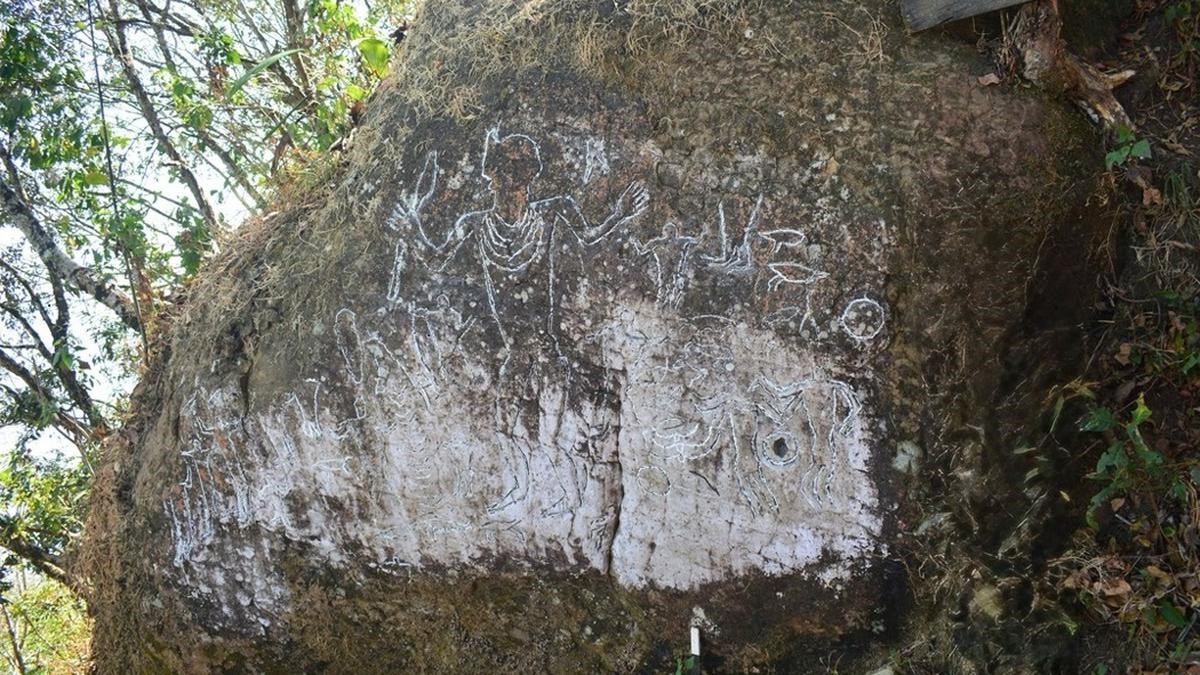
- The mithun (Bos frontalis) is a semi-domesticated bovine found in the region.
- Carvings found at Lianpui in Champhai district include a prominent human figure, stacked rows of human figures, animals, fish, spears, dao (a type of machete), hornbills, and rectangular chambers.
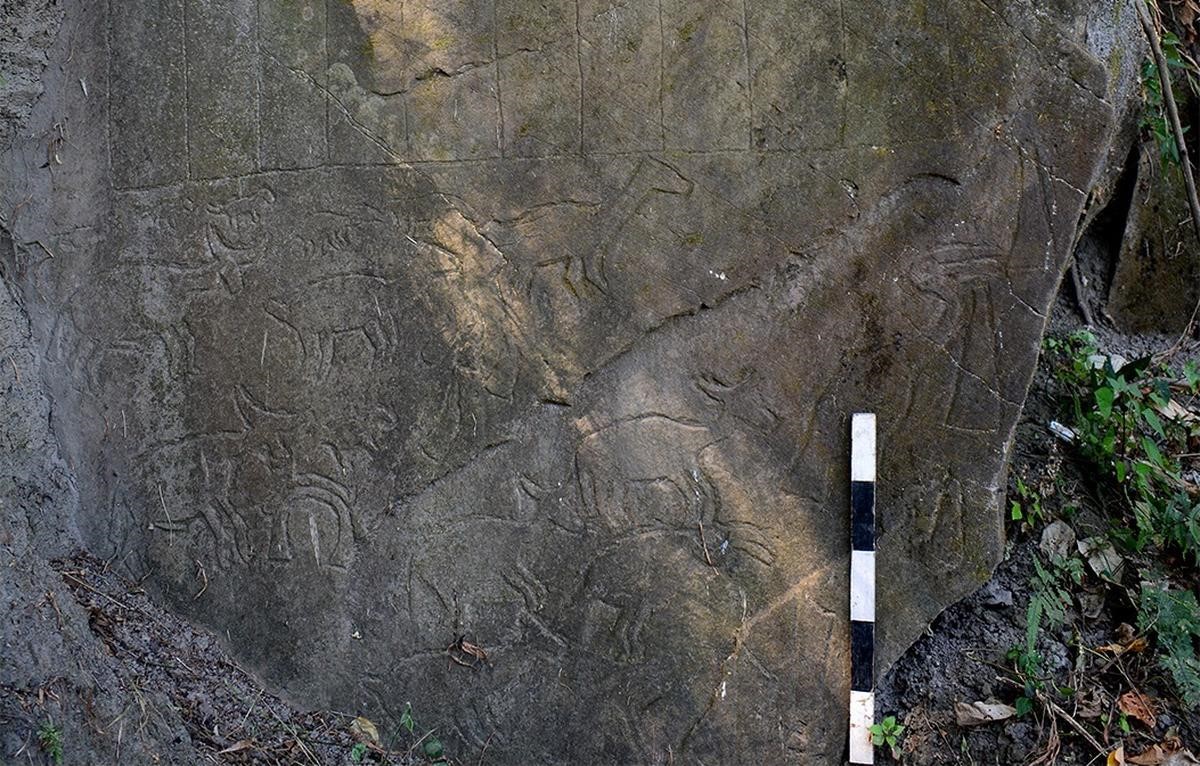
- In Khawzawl district, findings at Tualte included etched mithun heads, human figures, grooved marks, and rectangular figurines on a vast rock surface.
- At Chhawrtu, also in Khawzawl, carvings comprised a unique combination of human figures, mithun heads, rows of human heads, a circular figurine with tendril-like lines, and a fish motif, all intricately carved.
- These discoveries highlighted the rich cultural heritage of Mizoram and the artistic expression of its ancient inhabitants.
- Vangchhia site - The recently identified rock art sites, recommended for preservation, are situated in the area around Vangchhia in the Champhai district.
- In January 2016, the Archaeological Survey of India (ASI) recognized Vangchhia as a location with indications of a substantial settlement, possibly linked to a "lost civilization" from the Neolithic Era, and referred to it as a "living history museum."
- The Vangchhia site, covering about 45 square kilometres yielded pictographs etched on large stone slabs, menhirs (large standing stones), a necropolis (a large burial ground), and other relics.
- Particularly noteworthy were a structure identified as a water pavilion and numerous strategically drilled holes, ranging from less than one foot to one metre in diameter, found in sandstones across several hill slopes.
- Archaeologists developed theories behind the seemingly simple science of water harvesting techniques employed at Vangchhia, likely capable of sustaining local populations for at least a year.
- They noted how inhabitants appeared to have trapped rainwater flowing down slopes by utilizing natural fissures and veins in the rocks, enhanced by the drilled holes.
- Researchers suggested this natural adaptation might have obviated the need for constructing large water tanks, despite the apparent capability to do so.
- Among the theories proposed for the drilled holes were denying enemies easy access to water sources, luring animals for hunting, and possible ritualistic practices.
- However, all theories converged on the primary function of efficient water harvesting.
Reference
The Hindu | old rock art sites in Mizoram


