Prelims – Current events of national and international importance| Economic and Social Development.
Mains (GS III) – Inclusive growth and issues arising from it.
Why in News?
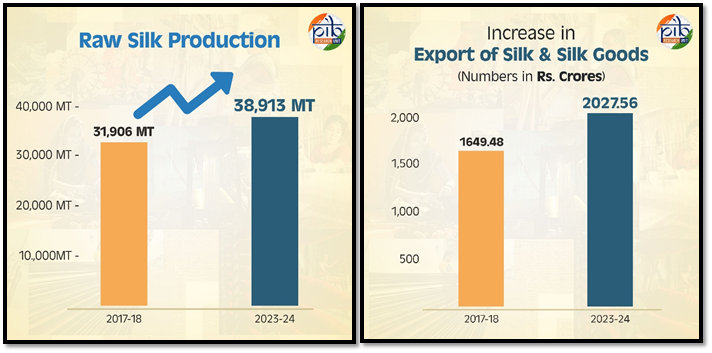
According to the recent data of Ministry of Textiles, India’s silk production and exports have been raised from 2017-18 to 2023-24.
- Silk – It is a thread made from pure mulberry silk, which is woven by skilled artisans.
- Silk from silkworms – Sericulture is the process of farming silkworms, which eat mulberry leaves to make silk.
- Global production – It has accounting for only 0.2 % of world's total textile production.
- India’s production – It is the 2nd largest producer and consumer of silk globally.
- State wise production
- Mulberry silk – Karnataka, Andhra Pradesh, Tamil Nadu, Jammu & Kashmir and West Bengal.
- Non-mulberry silk – Jharkhand, Chattisgarh, Orissa and north-eastern states.
India's total raw silk production increased during the period 2017-24 and Exports of silk and silk goods rose during the period 2017-24.
Initiatives to Silk Development
- Silk Samagra Scheme – To scale up production by improving the quality and productivity of sericulture in the country.
- Silk Samagra-2 – To improve the entire silk production process, from raising silkworms to producing quality silk fabrics.
- Raw Material Supply Scheme (RMSS) – To make available quality yarn & their blends to the eligible Handloom weavers at subsidized rates.
- National Handloom Development Programme (NHDP) – To support weavers in the handloom sector, including silk fabric producers.
- Scheme for Capacity Building in Textile Sector Scheme (SAMARTH) – To focus on entry-level training, upskilling and reskilling in Apparel & Garmenting, handloom, handicraft, silk, and jute.
|
Types of Silk in India
|
- Mulberry silk – It comes from silkworms that eat only mulberry leaves.
- Feature – It is soft, smooth, and shiny with a bright glow, making it perfect for luxury sarees and high-end fabrics.
- 92% of the country's total raw silk production comes from mulberry.
- Non-mulberry silk – It comes from wild silkworms that feed on leaves from trees like oak, castor and arjun.
- Feature – It is a natural silk with less shine but is strong, durable, and eco-friendly.
- Silk waste – It's repurposed to create lower-quality products like silk yarn or fabric, or even recycled into new silk items.
|
Reference
PIB| Magic of Indian Silk Production


