Mains Syllabus: GS III - Science and Technology- developments and their applications and effects in everyday life.
Why in the News?
India used AI technologies in Operation Sindoor.
What are the applications of AI in Defence ?
- Air Defence - The Indian armed forces used AI cloud-based integrated air command and control systems to detect and position any hostile objects in the sky.
Integrated Air Command and Control System (IACCS) is an automated command and control system that integrates data from all air defence assets to detect, identify, intercept, and destroy hostile intruders.
- Neutralize Airborne Threats - Akashteer (AkashTeer) is India’s first indigenous AI-driven war cloud that can intercept and neutralize airborne threat, from drones to missiles, without detection.
- Intelligence, Surveillance, and Reconnaissance (ISR) - Automated target recognition, image analysis, and predictive analytics are widely used for real-time intelligence and surveillance.
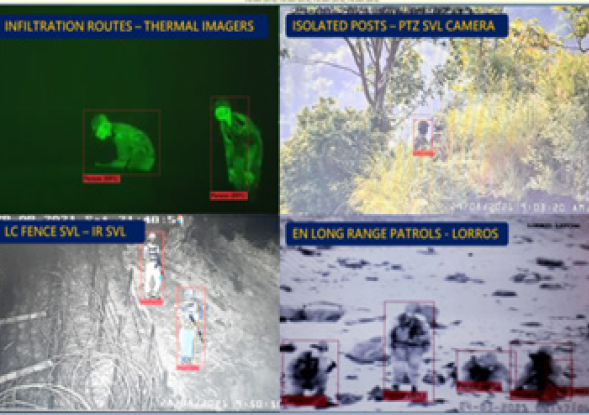
- iSentinel is a deep learning-based threat detection and tracking system that can track and trace terror movementsin real time.
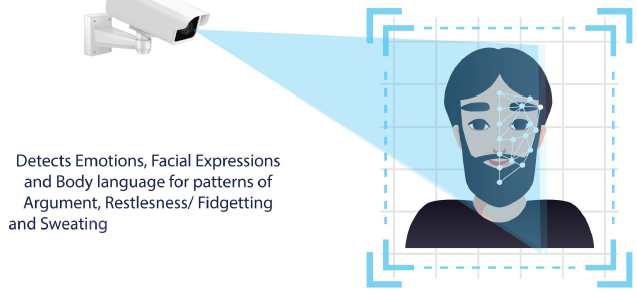
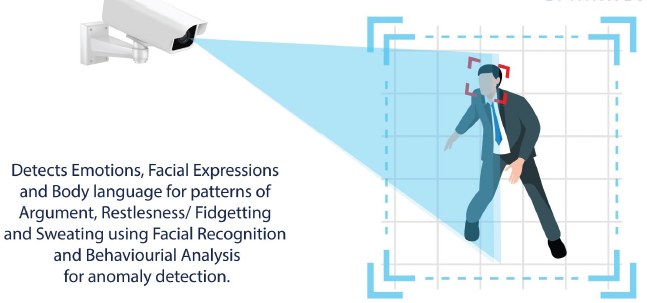
- Border and Maritime Surveillance - AI-based solutions integrate data from cameras, radars, and sensors for effective border and maritime surveillance, aiding in the detection of illegal activities and unauthorized movements.
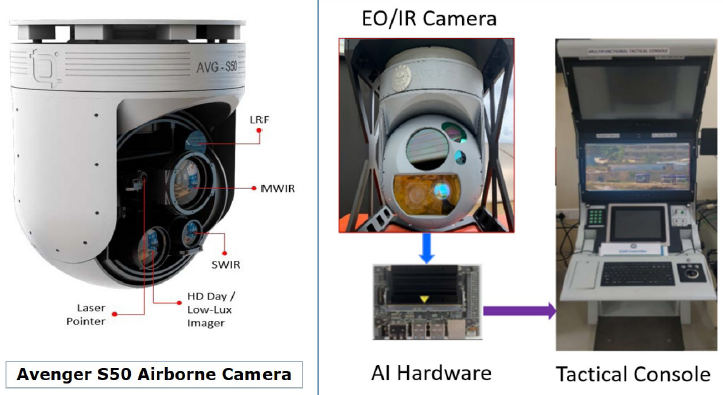
- AI-Enabled Airborne Electro-Optic Infrared System ( EO/IR ) camera is DRDO’s state-of-the-art AI-based object detection and classification system.
- Autonomous Vehicles and Weapon Systems - AI powers unmanned aerial vehicles (UAVs), ground vehicles, and submarines for reconnaissance, surveillance, logistics, and even combat operations.
- Loitering munitions (e.g., AI-guided "kamikaze drones") that can identify and attack targets autonomously.
- Aids in Decision Making - By taking advantage of AI technology in defence, the performance of forces can be enhanced as such technologies improve computational and decision making skills.
- Cybersecurity and Cyber Operations - AI is used for real-time detection and response to cyber threats, protecting military networks and infrastructure.
- Combat Simulation and Training - AI-driven simulations provide realistic training environments for soldiers and pilots, including war-gaming and virtual adversary tactics
- Drone Swarms - AI enables coordinated drone swarms for surveillance, electronic warfare, and offensive missions, multiplying force effectiveness.
Drone Swarms are a group of drones operating in conjunction with ground manoeuvre forces.
|
Advantages of using AI in Defence
|
|
Advantage
|
Description
|
|
Enhanced Safety
|
Reduces human exposure to danger
|
|
Faster Decision-Making
|
Real-time data processing for rapid responses
|
|
Increased Efficiency
|
Automates tasks, optimizes logistics and maintenance
|
|
24/7 Operation
|
Continuous, fatigue-free operation
|
|
Improved Cybersecurity
|
Real-time threat detection and response
|
|
Adaptability
|
Learns and evolves with new threats
|
|
Strategic Advantage
|
Enables split-second, data-driven tactical and strategic decisions
|
What are the government initiatives to adopt AI in Defence?
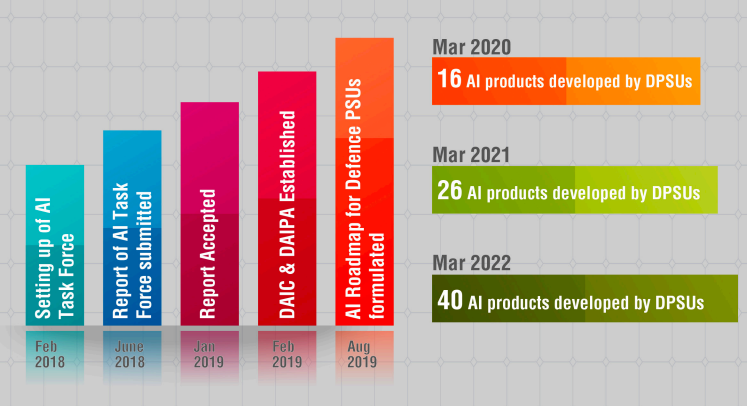
- Multi-stakeholder Task Force - In 2018, the Ministry of Defence (MoD) had set up a multi-stakeholder task force to study issues around the strategic implications of AI from a national security perspective.
- Defence Artificial Intelligence Council (DAIC) – It has been set up to provide necessary guidance and structural support for the enhancement of capabilities of ai technology.
- Defence AI Project Agency (DAIPA) – It has been created for enabling AI based processes in defence Organisations.
- AI Roadmap - In 2022, the government also finalised a roadmap for defence public sector companies under which 70 defence specific AI projects were finalised, of which 40 had been completed.
- Fund Allocation - As of 2022, Rs 100 crore was allocated by each defence service for AI implementation.
Reference
The Indian Express | AI in the battlefield


